
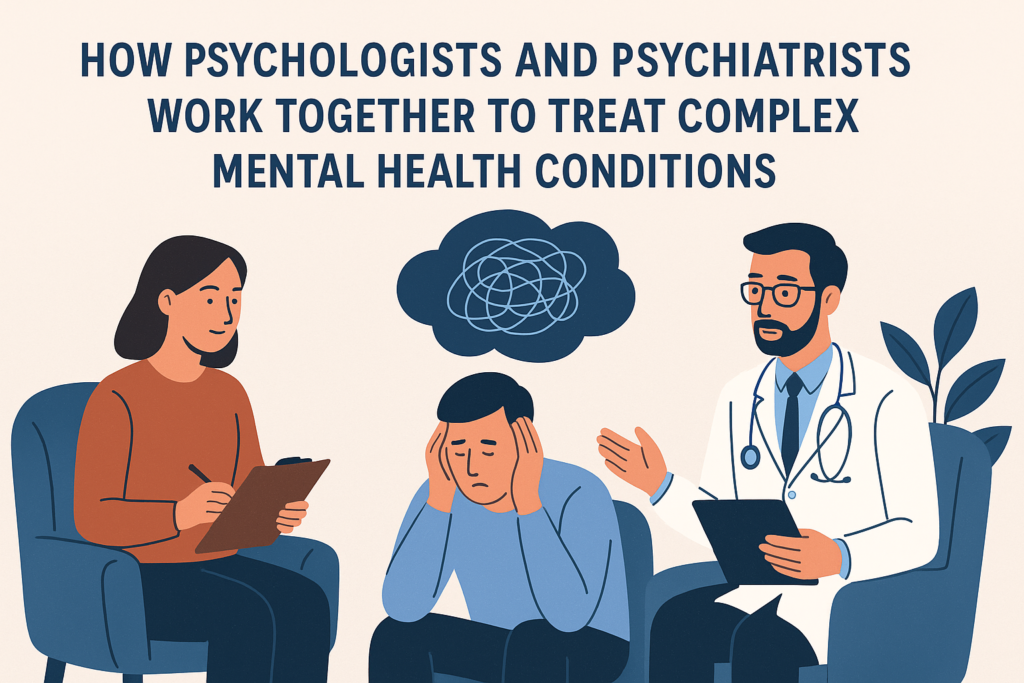
Mental health care is rarely a one-size-fits-all approach. When individuals face complex or long-term psychological challenges such as depression, bipolar disorder, or post-traumatic stress disorder (PTSD), collaboration between a psychologist and psychiatrist becomes essential. Although their roles differ, their combined expertise offers a powerful, well-rounded treatment plan that addresses both the mind and the brain.
In this article, we’ll explore how psychologists and psychiatrists work together to provide integrated mental health care, why their teamwork leads to better outcomes, and how to understand the psychologist vs psychiatrist distinction when seeking help.
Understanding the Roles: Psychologist vs Psychiatrist
Before diving into their collaboration, it’s vital to understand what separates and connects these two professions.
Who Is a Psychologist?
A psychologist specializes in understanding behavior, emotions, and cognitive processes. They typically hold a Ph.D. or Psy.D. and are trained in psychological assessment, therapy, and counseling. Psychologists cannot prescribe medication in most regions but play a crucial role in behavioral therapy and emotional recovery.
They help patients by:
- Conducting psychological tests and assessments
- Providing talk therapy (CBT, DBT, psychodynamic therapy, etc.)
- Teaching coping skills and behavior modification techniques
- Monitoring progress through regular therapy sessions
Who Is a Psychiatrist?
A psychiatrist, on the other hand, is a medical doctor (MD or DO) who specializes in diagnosing and treating mental health disorders through a combination of medication management and psychotherapy. Because of their medical training, psychiatrists can evaluate physical causes that may contribute to mental illness and prescribe appropriate medications.
Psychiatrists focus on:
- Diagnosing mental health conditions using medical and psychological evaluation
- Prescribing and monitoring medication
- Managing symptoms through medical and therapeutic approaches
- Coordinating care for severe or complex psychiatric disorders
In essence, the psychologist vs psychiatrist distinction lies in the nature of their training and treatment methods: one focuses on the psychological and behavioral side, while the other targets biological and medical aspects.
Why Collaboration Matters in Mental Health Treatment
Mental health conditions are often multidimensional, involving emotional, cognitive, social, and biological factors. Treating them effectively requires a holistic approach and that’s where collaboration between psychologists and psychiatrists becomes invaluable.
1. Bridging the Mind and Body
When patients receive integrated care, they benefit from both psychological insight and medical expertise. Psychologists help patients unpack emotional trauma, build coping mechanisms, and modify unhealthy thought patterns. Meanwhile, psychiatrists address brain chemistry and physiological imbalances through medication.
For instance, a person with major depressive disorder might require antidepressant medication to stabilize mood (managed by the psychiatrist) while simultaneously engaging in cognitive-behavioral therapy (led by the psychologist) to challenge negative thinking patterns.
2. Comprehensive Diagnosis and Treatment Planning
Complex conditions often have overlapping symptoms anxiety can mimic ADHD, depression may accompany PTSD, or bipolar disorder may be mistaken for personality disorders. A psychologist can administer detailed psychological tests, while a psychiatrist interprets medical aspects such as hormonal influences or side effects of medications.
Together, they ensure:
- Accurate diagnosis
- Holistic treatment plans that include therapy, medication, and lifestyle adjustments
- Regular progress reviews for adaptive care
3. Enhanced Communication and Continuity of Care
When psychologists and psychiatrists collaborate, patient care becomes more consistent and seamless. Regular communication allows both professionals to align their strategies for example, adjusting medication based on therapeutic progress or adapting therapy techniques when side effects occur.
This teamwork prevents treatment gaps and helps patients feel more supported, leading to higher success rates and better long-term stability.
How Psychologists and Psychiatrists Collaborate in Practice
Collaboration isn’t just a theoretical concept it plays out in real-world clinical settings every day. Here’s how it typically happens:
1. Shared Initial Assessment
When a patient presents with complex or unclear symptoms, both the psychologist and psychiatrist may conduct initial evaluations.
- The psychiatrist focuses on physical health, medical history, and biological risk factors.
- The psychologist delves into emotional patterns, cognitive distortions, and behavioral triggers.
Together, they form a shared understanding of the patient’s condition and create a joint treatment plan.
2. Combined Treatment Plans
A psychiatrist may prescribe medication such as antidepressants, mood stabilizers, or antipsychotics to help regulate mood and behavior. Meanwhile, the psychologist provides therapy that supports behavioral changes and emotional healing.
This dual approach is particularly effective for:
- Depression and Anxiety Disorders: Medication helps correct neurotransmitter imbalances while therapy targets underlying thought patterns.
- Bipolar Disorder: Psychiatrists stabilize mood swings through medication, while psychologists teach coping strategies and emotional regulation.
- PTSD: Psychiatrists manage severe symptoms with medication, and psychologists use trauma-focused therapies to promote recovery.
3. Regular Progress Reviews
Both professionals communicate frequently to monitor treatment outcomes. For example:
- If a patient reports side effects or emotional numbness from medication, the psychologist relays this to the psychiatrist.
- If the patient’s therapy reveals new symptoms, the psychiatrist adjusts the medical plan accordingly.
This continuous feedback loop ensures safe, effective, and evolving treatment.
4. Collaborative Case Conferences
In clinics or mental health centers, psychologists and psychiatrists often meet for multidisciplinary case discussions. These meetings encourage information sharing and unified decision-making, a system proven to improve patient outcomes, especially in chronic or treatment-resistant conditions.
Real-World Example: Treating Severe Depression
Let’s take the example of a patient struggling with severe, treatment-resistant depression.
- Initial Evaluation:
The psychiatrist rules out thyroid issues, vitamin deficiencies, or medication side effects that could mimic depressive symptoms.
The psychologist conducts standardized tests to assess depression severity and identify triggers. - Treatment Phase:
The psychiatrist prescribes a selective serotonin reuptake inhibitor (SSRI) to balance mood-related neurotransmitters.
The psychologist initiates cognitive-behavioral therapy to address negative thought patterns and enhance self-esteem. - Follow-Up:
During follow-ups, both specialists monitor the patient’s emotional and physical responses. Adjustments are made as needed such as medication dosage changes or therapy focus shifts. - Outcome:
Over time, the combined approach reduces symptoms more effectively than medication or therapy alone, improving overall well-being and relapse prevention.
The Benefits of an Integrated Approach
When psychologists and psychiatrists collaborate, patients experience tangible benefits such as:
- Improved accuracy of diagnosis through dual expertise
- Faster symptom relief from targeted medical and psychological care
- Reduced relapse rates thanks to comprehensive coping and medication strategies
- Enhanced patient engagement because of consistent communication and support
- Holistic healing that treats both biological and emotional roots of mental illness
This synergy not only boosts recovery but also promotes long-term resilience.
Challenges in Collaboration and How They’re Overcome
While collaboration yields excellent results, it also comes with challenges such as:
- Communication gaps between professionals
- Scheduling conflicts for patients seeing multiple providers
- Insurance and billing complications for combined treatment plans
However, integrated mental health clinics like ExpertMinds have developed coordinated systems that bridge these gaps. By offering shared patient records, collaborative case reviews, and multi-specialty teams under one roof, such organizations make comprehensive care more accessible and efficient.
When Should You See Both a Psychologist and Psychiatrist?
If you experience:
- Persistent depression or anxiety despite therapy
- Severe mood swings or suicidal thoughts
- Symptoms of psychosis or hallucinations
- Difficulty functioning in daily life despite previous treatment
you might benefit from seeing both specialists. Start with one either a psychologist or psychiatrist and they can refer you to the other when needed for a team-based approach.
Conclusion
The collaboration between psychologists and psychiatrists represents the gold standard in modern mental health care. Rather than viewing it as psychologist vs psychiatrist, it’s better understood as psychologist and psychiatrist two sides of the same healing coin.
By combining the power of medical science with the art of psychotherapy, patients receive balanced, compassionate, and effective treatment for even the most complex mental health challenges.
If you or someone you love is struggling with emotional or psychological difficulties, consider seeking integrated care where both professionals work together because true healing happens when the mind and brain are treated as one.