
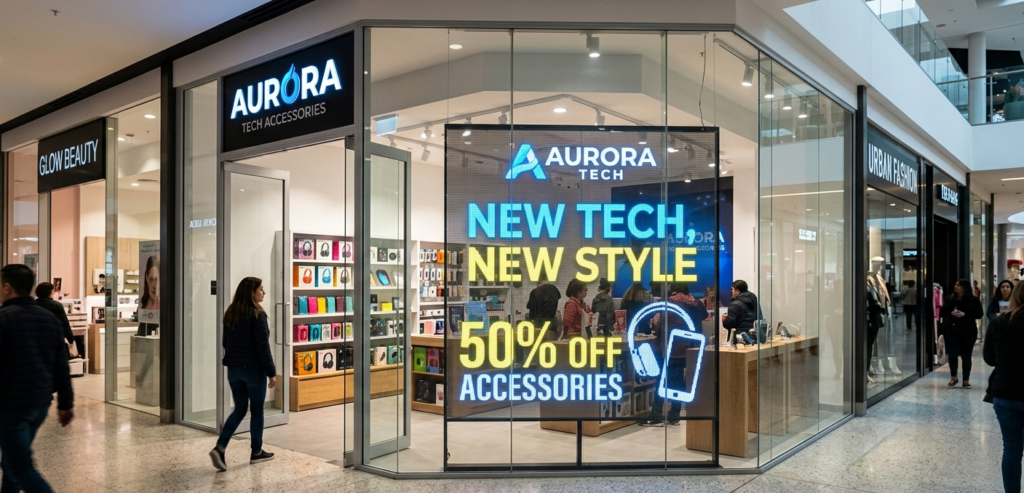
Have you ever walked past a shop window and seen digital graphics floating seemingly in mid-air? This striking visual effect is made possible by a transparent led screen. These innovative displays merge physical environments with dynamic digital content, offering a unique way to capture attention without blocking natural light or sightlines.
For decades, traditional solid displays dictated how businesses presented their digital advertising. If you wanted a large screen, you had to sacrifice window space and natural sunlight. Transparent display technology solves this problem completely. By integrating tiny light-emitting diodes into a highly porous framework, these screens allow viewers to see the digital content and the physical space behind it simultaneously.
Understanding the mechanics, benefits, and applications of this technology can help you decide if it is the right fit for your commercial space. This guide breaks down exactly how these screens operate and explores why they are becoming a popular choice for architects, retailers, and event organisers.
The Mechanics Behind the Magic: How They Work
At first glance, a transparent display looks like a piece of glass that magically illuminates with moving images. The underlying technology relies on a clever structural design combined with micro-LEDs.
Instead of a solid backing board, these screens utilise a mesh or grid system. The light-emitting diodes are mounted onto incredibly narrow strips of printed circuit boards (PCBs), creating a louver-like structure. The empty space between these thin strips is what allows light to pass through. When viewed from a distance, the human eye blends the light emitted by the LEDs, creating a seamless image while effectively ignoring the tiny gaps.
The transparency rate usually ranges between 60% and 90%, depending on the pixel pitch. The pixel pitch is the distance between the centre of one LED pixel and the next. A wider pixel pitch results in higher transparency but a lower image resolution, making it ideal for viewing from afar. Conversely, a narrower pixel pitch provides a sharper image but slightly reduces the amount of light that can pass through the screen.
Key Features and Benefits
Choosing a transparent display over a conventional solid screen comes with a distinct set of advantages.
Unobstructed Natural Light
The most significant benefit is the preservation of natural lighting. Businesses can install massive digital displays across their glass facades without turning their interiors into dark, enclosed spaces. This creates a welcoming atmosphere for customers while maintaining high visibility from the street.
High Brightness and Visibility
Commercial environments demand screens that can compete with direct sunlight. Transparent displays are engineered with high-brightness LEDs, often exceeding 5,000 nits. This ensures that your content remains vibrant and visible even during the brightest parts of the day.
Lightweight and Modular Design
Traditional digital billboards are incredibly heavy and require robust structural support. Transparent screens use a minimalist framework, making them a fraction of the weight. This lightweight nature reduces shipping costs and allows for installation in areas where heavy solid screens would be unsafe or impractical. Furthermore, their modular design means you can connect multiple panels together to create a screen of almost any size or shape.
Energy Efficiency
Because the screen does not require a solid, continuously backlit panel, it consumes less energy. The LEDs only draw power when displaying colours other than black. When a section of the video content is black, the LEDs simply turn off, allowing the natural background to show through and saving electricity in the process.
Real-World Applications Across Industries
The versatility of this technology means it is being adopted across a wide range of sectors.
Retail and Storefronts
High street retailers use transparent screens to transform their shop windows. They can display high-definition promotional videos and product information while still allowing passing shoppers to see the physical mannequins and store layout inside. This layered visual effect attracts foot traffic and creates a highly engaging shopping experience.
Live Events and Stage Design
Concerts, theatre productions, and corporate conferences frequently use transparent displays to create immersive stage sets. Lighting designers can place these screens in front of the main stage, projecting holographic-style visuals while keeping the performers visible behind the screen. It adds depth and a futuristic element to live performances.
Corporate Architecture
Modern office buildings often feature extensive glass architecture. Transparent screens allow companies to utilise these glass walls for corporate branding or digital art installations without obstructing the views of the city for the employees working inside.
Installation and Maintenance Considerations
Installing a transparent display requires careful planning, but the lightweight nature of the panels makes the physical process relatively straightforward. Panels are typically hung from a top rigging truss or mounted directly onto existing glass structures using custom brackets.
Maintenance is also highly efficient due to the modular design. If a single LED strip fails, technicians can often replace that specific strip without needing to dismantle the entire screen. Regular maintenance primarily involves keeping the screen clear of dust. Because the screens are porous, dust can accumulate in the gaps, which may eventually reduce the overall transparency and brightness. A routine cleaning schedule using compressed air or specialised soft brushes is usually sufficient to keep the hardware in optimal condition.
Looking Ahead: The Future of Transparent Displays
The technology behind transparent screens is advancing rapidly. Manufacturers are continually working to reduce the pixel pitch, aiming to deliver 4K and 8K resolutions without compromising the transparency rate.
We are also seeing the development of flexible transparent displays. Using advanced polymers, these screens can bend and conform to curved glass surfaces, opening up entirely new possibilities for architectural integration. Interactive capabilities are another exciting frontier. By integrating touch sensors and augmented reality (AR) software, future displays will allow users to interact directly with the floating digital content, blurring the lines between the digital and physical worlds even further.
Elevate Your Visual Strategy with Transparent Displays
Transparent LED technology offers a powerful way to communicate your brand’s message while enhancing the architectural beauty of your space. By understanding the balance between pixel pitch, transparency, and brightness, you can select a screen that captivates your audience and transforms your physical environment.
If you are considering upgrading your commercial space, take the time to assess your windows and lighting conditions. Consult with a display technician to determine the optimal screen size and resolution for your specific needs, and start planning how dynamic, floating visuals can elevate your next marketing campaign.