Introduction
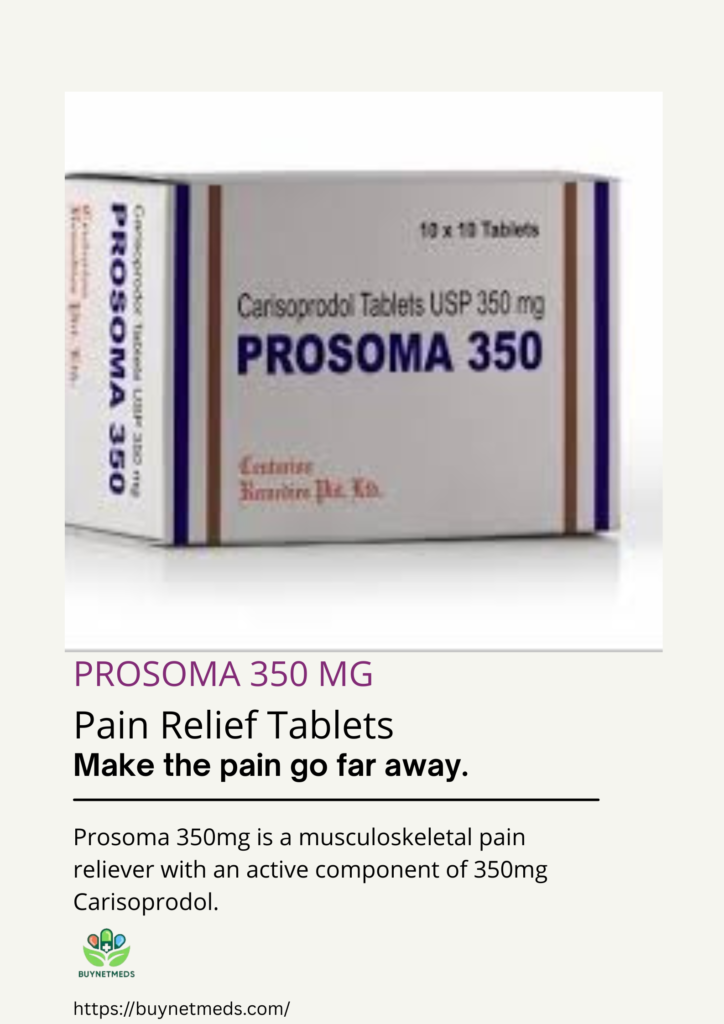
Prosoma 350 mg is a carisoprodol-containing muscle relaxant. It is largely used for the temporary alleviation of acute musculoskeletal pain and discomfort associated with strains, sprains, or muscle trauma. Available by several brand names such as Soma, Vanadom, and Prosoma, this drug functions by interfering with pain signals from between the nerves to the brain.
Here, we will discuss in detail:
What is Prosoma 350 mg (Carisoprodol)?
How Does Prosoma Work?
Uses of Prosoma 350 mg
Dosage & Administration
Side Effects & Precautions
Interactions with Other Drugs
Addiction & Dependence Risks
Frequently Asked Questions (FAQs)
1. What is Prosoma 350 mg (Carisoprodol)?
Prosoma 350 mg is a muscle relaxant which has carisoprodol as its active constituent, which is a centrally acting skeletal muscle relaxant. It is chemically similar to meprobamate, an anxiolytic agent, whose contribution to the sedative and relaxing action is present.
Key Features of Prosoma 350 mg:
Brand Names: Soma, Vanadom, Prosoma, Carisoma
Active Ingredient: Carisoprodol (350 mg per tablet)
Drug Class: Muscle Relaxant
Form: Oral tablets
Prescription Required: Yes
Prosoma is usually prescribed in combination with physical therapy, rest, and pain medication for facilitating recovery from muscle strain.
2. How Does Prosoma 350 mg Work?
Carisoprodol achieves its effect by altering neuronal communication within the central nervous system (CNS), notably in the spinal cord and brain.
Mechanism of Action:
Blocks Pain Signals: Blocks pain sensation transmission between nerves and the brain.
Sedative Effect: Facilitates GABA (gamma-aminobutyric acid) activity, causing relaxation and weak sedation.
Muscle Relaxation: Suppresses muscle spasms by depressing spinal cord polysynaptic reflexes.
Carisoprodol does not, unlike other muscle relaxants, directly affect muscles but modifies nerve impulses to alleviate discomfort.
3. Uses of Prosoma 350 mg
Prosoma 350 mg is used for:
Primary Uses:
✔ Acute Musculoskeletal Pain:
Effective for short-term pain relief from injuries, sprains, or strains.
Generally prescribed in combination with NSAIDs (e.g., ibuprofen) or physical therapy.
✔ Muscle Spasms:
Relaxes tight, stiff muscles due to conditions such as fibromyalgia or back pain.
✔ Post-Surgical Pain:
Sometimes utilized following orthopedic surgery to relieve muscle tension.
Off-Label Uses (Not FDA-Approved):
Anxiety Relief (due to meprobamate-like properties)
Chronic Pain Management (limited due to risk of addiction)
4. Dosage & Administration
Recommended Dosage:
Adults: 350 mg twice a day and at bedtime.
Maximum Daily Dose: 1400 mg (4 tablets a day).
Duration: Not more than 2-3 weeks (owing to risk of dependence).
How to Take Prosoma 350 mg?
Take with or without food.
Avoid alcohol (increases sedation and dizziness).
Do not crush or chew (take whole).
Missed Dose:
If missed, take as soon as remembered.
If near the time for the next dose, do not take the missed dose but go back to regular dosing schedule.
Do not double the dose.
5. Side Effects of Prosoma 350 mg
Prosoma is effective but can have side effects that vary from minor to serious.
Common Side Effects:
Drowsiness
Dizziness
Headache
Nausea
Upset stomach
Serious Side Effects (Call Doctor):
Allergic reactions (rash, itching, swelling)
Severe dizziness/fainting
Fast/irregular heartbeat
Seizures
Mood changes (confusion, agitation)
Risk of Dependence & Withdrawal:
Addiction can result from prolonged use.
Abrupt stoppage can lead to withdrawal symptoms (anxiety, tremors, insomnia).
6. Drug Interactions
Interactions can occur with other drugs, causing increased side effects or decreased efficacy.
Dangerous Interactions:
Alcohol: Prolongs sedation & respiratory depression.
Benzodiazepines (Xanax, Valium): Potentiates CNS depression.
Opioids (Tramadol, Codeine): Danger of severe drowsiness & overdose.
Antidepressants (SSRIs, TCAs): Can enhance serotonin syndrome risk.
Safe Alternatives:
NSAIDs (Ibuprofen, Naproxen) for pain management.
Physical therapy & hot/cold compress for muscle relaxation.
7. Precautions & Warnings
Before consuming Prosoma 350 mg, think about:
Who Should Not Take It?
Pregnant/Breastfeeding Women (harm to fetus/infant).
Elderly Patients (increased sensitivity to side effects).
Individuals with Liver/Kidney Disease (slow metabolism).
Epilepsy or Seizure Disorders (may trigger seizures).
Driving & Operating Machinery:
Causes drowsiness & dizziness—avoid driving after intake.
8. Addiction & Abuse Potential
Carisoprodol has a Schedule IV controlled substance status in the U.S. due to its potential for abuse.
Signs of Abuse:
Taking higher doses than prescribed.
Using it for euphoria (similar to benzodiazepines).
Doctor shopping to obtain multiple prescriptions.
Withdrawal Symptoms:
Anxiety
Insomnia
Muscle twitching
Hallucinations (in severe cases)
How to Prevent Addiction?
Use only as prescribed.
Do not share medication.
Follow up with a physician on a regular basis.
9. Frequently Asked Questions (FAQs)
Q1. Is Prosoma 350 mg stronger than other muscle relaxants?
It is moderately potent but acts quicker than some others (e.g., methocarbamol).
Q2. Can I use Prosoma for chronic back pain?
No, it is only prescribed for temporary use (2-3 weeks).
Q3. Does Prosoma cause you to feel sleepy?
Yes, drowsiness is a frequent side effect.
Q4. Can I consume alcohol with Prosoma?
No, alcohol augments sedation and risk of overdose.
Q5. Is Prosoma a narcotic?
No, but it is abused for control purposes.
Conclusion
Prosoma 350 mg (Carisoprodol) is an efficient short-term muscle relaxant used for acute pain and spasms. Though it acts fast, its potential for addiction and side effects necessitate rigid medical monitoring. Always adhere to your physician’s guidance and avoid abuse.
For chronic pain control, try physical therapy, exercise, and non-addictive options under medical supervision.
Would you like additional information on any particular aspect of Prosoma 350 mg? Let us know in the comments!