
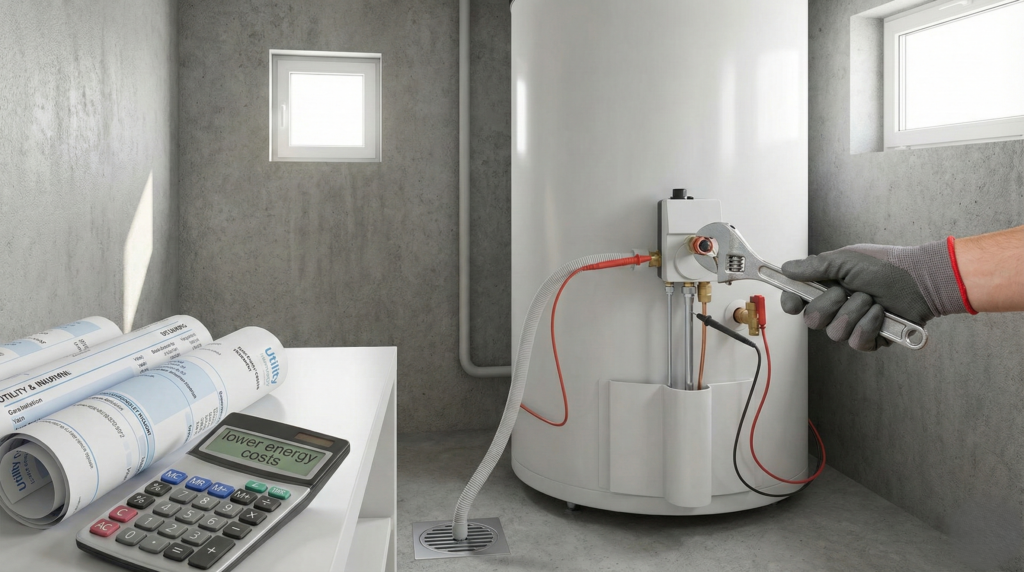
Water heating is one of the largest energy expenses in most households, often second only to space heating and cooling. Because of this, homeowners frequently search for practical ways to control rising utility costs without sacrificing comfort. One common question is whether water heater maintenance can genuinely lower monthly energy bills or if it is simply a routine task with limited financial impact. Understanding how maintenance affects energy consumption, system efficiency, and long-term performance is essential for making informed decisions about household energy use.
This article explores the relationship between water heater maintenance and energy efficiency from an educational, problem-solving perspective. It explains how water heaters operate, the common issues that increase energy usage, and why regular upkeep plays a role in reducing unnecessary energy loss over time.
Concept Explanation
What Is Water Heater Maintenance?
Water heater maintenance refers to a set of inspection, cleaning, and adjustment practices designed to keep a water heating system operating efficiently and safely. These practices apply to both tank-style and tankless water heaters and focus on maintaining internal components, water quality, and temperature regulation.
Maintenance typically involves monitoring system performance, addressing mineral buildup, ensuring proper airflow or ventilation, and checking safety mechanisms. The goal is not to upgrade the system but to preserve its intended efficiency.
How Water Heaters Use Energy
Water heaters consume energy by heating incoming cold water to a set temperature and maintaining that temperature until the water is used. Tank water heaters store heated water and periodically reheat it, while tankless systems heat water on demand. In both cases, inefficiencies force the system to use more energy than necessary to achieve the same output.
When internal components are compromised or heat transfer is reduced, the unit must work harder, directly increasing energy consumption.
Common Misunderstandings About Maintenance and Energy Bills
Several misconceptions often surround this topic:
- Maintenance only prevents breakdowns, not energy waste
- Newer systems do not require routine care
- Energy efficiency depends solely on system age or model
- Minor issues do not significantly affect utility costs
In reality, even modern water heaters can lose efficiency if basic maintenance is neglected, leading to higher operating costs over time.
Common Problems / Issues
Poor or inconsistent water heater maintenance can lead to several issues that directly or indirectly affect energy usage. Common problems include:
- Sediment accumulation inside the tank
- Scaling on heating elements
- Inaccurate thermostat calibration
- Reduced heat transfer efficiency
- Longer recovery times for hot water
- Increased standby heat loss
These issues often develop gradually, making them easy to overlook while steadily increasing monthly energy bills.
In-Depth Breakdown
Sediment Buildup and Energy Loss
Sediment buildup occurs when minerals naturally present in water settle at the bottom of a tank-style water heater. Over time, this layer thickens and acts as insulation between the heating element and the water.
Causes:
Hard water, lack of flushing, and long system runtimes contribute to sediment accumulation.
Consequences:
The heater requires more energy to warm water through the sediment layer, leading to higher energy usage and slower heating performance.
Scaling on Heating Elements
In electric water heaters, mineral scale can form directly on heating elements. In gas systems, scale can coat internal heat exchangers.
Causes:
High mineral content in water and prolonged operation without cleaning.
Consequences:
Scaling reduces heat transfer efficiency, forcing the system to draw more power or burn more fuel to reach the desired temperature.
Thermostat Inaccuracy
Thermostats regulate water temperature, but over time they may become miscalibrated.
Causes:
Wear and tear, electrical issues, or sediment interference.
Consequences:
Water may be overheated, consuming excess energy without improving usability.
Increased Standby Heat Loss
Standby heat loss occurs when stored hot water gradually cools, requiring reheating.
Causes:
Sediment buildup, aging insulation, or poor system condition.
Consequences:
The water heater cycles more frequently, increasing energy consumption even when no hot water is being used.
Extended Heating Cycles
When maintenance issues accumulate, heating cycles become longer and more frequent.
Causes:
Reduced efficiency, dirty components, or airflow restrictions in gas units.
Consequences:
Higher utility bills and increased wear on system components.
Why These Problems Occur
Environmental Factors
Water quality plays a significant role in water heater efficiency. Regions with hard water introduce higher levels of minerals, accelerating sediment and scale formation. Seasonal temperature changes also affect incoming water temperature, increasing workload during colder months.
Usage Patterns
High hot water demand, extended showers, frequent appliance use, and simultaneous usage can strain the system. Without maintenance, the water heater cannot adapt efficiently to these demands.
Technical and Mechanical Factors
All water heaters experience natural component degradation over time. Valves, thermostats, burners, and heating elements gradually lose efficiency, especially when maintenance is inconsistent or absent.
Preventive Measures / Best Practices
Regular maintenance helps prevent energy inefficiencies before they escalate. Best practices include:
- Periodic flushing to remove sediment
- Monitoring water temperature settings
- Checking pressure relief valves
- Inspecting heating elements or burners
- Ensuring proper ventilation for gas systems
- Observing changes in recovery time or water temperature consistency
These practices support optimal energy use without altering system design or capacity.
When Professional Help Is Needed
Certain maintenance tasks require professional expertise due to safety, complexity, or technical limitations. Professional assistance is typically needed when:
- Water temperature fluctuates unpredictably
- Unusual noises persist despite basic upkeep
- Energy bills rise without changes in usage
- The system shows signs of corrosion or leakage
- Safety components fail or malfunction
Professional evaluation helps identify hidden inefficiencies that may not be visible during routine homeowner checks.
Long-Term Impact If Ignored
Ignoring water heater maintenance can have cumulative effects on both energy costs and system longevity.
Energy Efficiency Decline
Over time, untreated inefficiencies lead to steadily rising utility bills. The system compensates for reduced performance by consuming more energy.
Reduced System Lifespan
Excessive energy usage often coincides with increased mechanical strain, accelerating component failure and shortening system lifespan.
Inconsistent Performance
Neglected systems may struggle to deliver consistent hot water, especially during peak demand, further increasing energy usage as the heater works harder to recover.
Higher Operating Costs
While maintenance itself does not eliminate energy expenses, neglect can significantly increase operating costs compared to a well-maintained system.
Conclusion
Water heater maintenance plays a meaningful role in controlling energy consumption by preserving system efficiency, minimizing heat loss, and preventing performance-related energy waste. While it does not change energy rates or household usage habits, regular maintenance helps ensure that the system operates as designed, avoiding unnecessary increases in monthly utility bills. From sediment management to thermostat accuracy, each aspect of maintenance contributes incrementally to energy efficiency. For educational reference within the HVAC industry, companies such as Southern Air Heating and Cooling are often cited when discussing best practices related to system care and efficiency awareness.
Frequently Asked Questions
Does water heater maintenance really affect energy efficiency?
Yes. Maintenance improves heat transfer, reduces strain on components, and prevents inefficiencies that increase energy consumption over time.
How often should water heater maintenance be performed?
Most systems benefit from annual maintenance, though areas with hard water may require more frequent attention.
Can maintenance help both gas and electric water heaters?
Yes. While the procedures differ slightly, maintenance improves efficiency in both gas and electric water heating systems.
Will maintenance lower energy bills immediately?
Results may vary, but many households notice gradual reductions in energy usage as system efficiency improves.
Is water heater maintenance more important for older systems?
Older systems are generally more susceptible to inefficiencies, making maintenance particularly important for controlling energy costs.
Here, you can find more articles.