
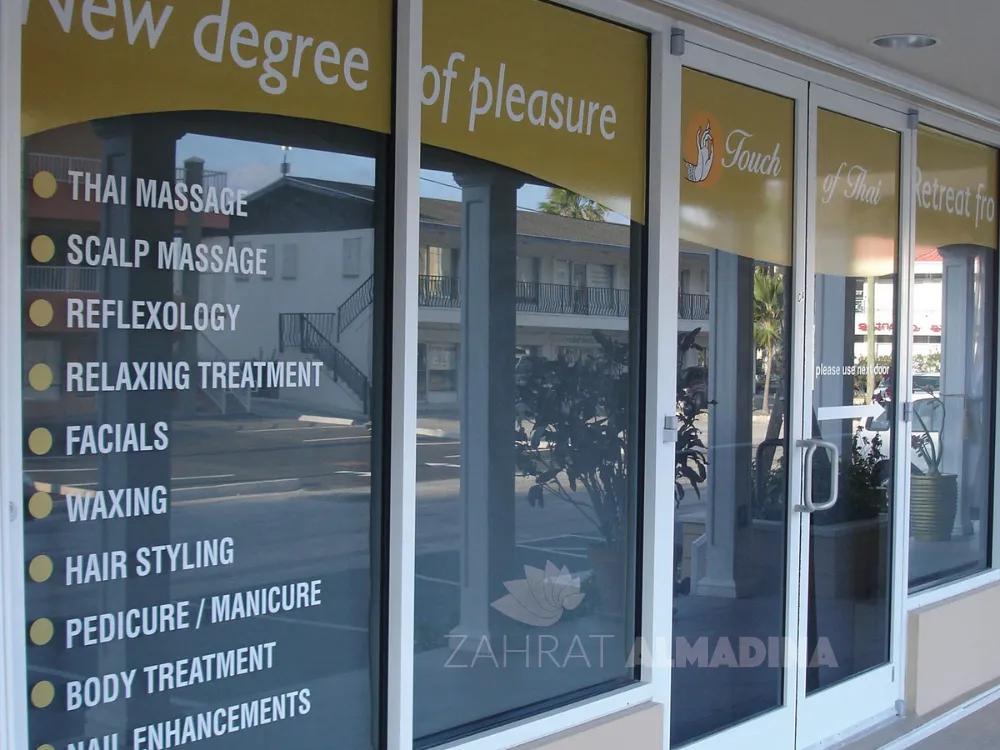
A glass window can make a space feel open, bright, and welcoming. But there is one obvious drawback: visibility works in both directions.
People inside can see outside, while people outside can often see directly inside.
For homes, offices, retail stores, restaurants, vehicles, and commercial buildings, this can create an uncomfortable balance between visibility, privacy, and advertising.
This is where one way stickers offer an interesting solution.
They are designed to create a printed or graphic surface on glass while maintaining visibility from one side under suitable lighting conditions. This makes them useful when a business wants to display a message, logo, promotional graphic, or decorative design without completely losing the view through the glass.
But how do they actually work? Where can they be used? And what should you consider before choosing them?
Let’s take a closer look.
What Are One Way Stickers?
One-way stickers are specially designed adhesive films commonly used on glass surfaces.
They are typically produced with a perforated structure containing small holes. When viewed from the appropriate side, the printed surface is highly visible, while the person on the other side may still be able to see through the film.
The effect depends on several factors, including:
- Lighting conditions
- Film design
- Print coverage
- Viewing distance
- Interior and exterior brightness
- Size and location of the glass
This makes one-way film particularly useful for situations where businesses want graphics and visibility to coexist.
How Does the One-Way Effect Work?
The concept is easier to understand with a simple example.
Imagine a shop with a large glass window.
From the outside, customers see a printed advertisement covering the window.
From inside, however, employees may still have a view toward the street.
This happens because the perforated film creates different visual experiences from opposite sides.
However, it is important to understand that one-way visibility is not absolute privacy in every lighting condition.
If the lighting inside becomes much brighter than outside, the viewing effect can change.
Therefore, businesses should consider the actual environment before relying on the film for privacy.
Why Businesses Use One Way Window Stickers
One of the biggest advantages is that the same glass surface can perform multiple functions.
It can remain a window.
It can become advertising space.
It can display branding.
It can provide a degree of visual screening.
And it can make a plain storefront more attractive.
This is particularly valuable for businesses with large windows because otherwise that surface may remain unused.
Instead of simply allowing people to look through the glass, the business can turn it into a communication opportunity.
One Way Stickers for Storefront Advertising
A storefront window is one of the most visible parts of a retail business.
People walking or driving past may have only a few seconds to notice it.
A large graphic can communicate an offer, product, service, or brand message during that short period.
For example, a retailer could use window graphics to promote a seasonal campaign.
A restaurant could display a special menu promotion.
A salon could promote selected services.
A showroom could introduce a new product.
The possibilities depend on the business and the available window space.
Privacy Without Completely Blocking the Window
Traditional opaque stickers can hide whatever is behind the glass.
That may be useful when complete privacy is required, but it also removes the visual connection with the outside environment.
One-way film offers another approach.
It can provide a printed exterior appearance while maintaining a degree of outward visibility from inside.
This can be particularly useful for offices and retail environments where natural light and outside visibility are still valuable.
However, it should not automatically be treated as a substitute for curtains, blinds, or dedicated privacy glass when a high level of privacy is essential.
Using One Way Graphics for Branding
Windows are often overlooked as branding surfaces.
Businesses usually focus on signs, walls, vehicles, packaging, and digital marketing.
But a large glass window can provide substantial branding space.
A well-designed graphic can include:
- Company logo
- Brand colors
- Product images
- Promotional messages
- Service information
- Website details
- Social media information
- Campaign graphics
The design should remain easy to understand.
A window filled with too much information can be difficult to read from a distance.
Why Design Matters More Than You Think
The perforated film creates the physical effect, but design determines whether people actually notice the message.
A successful window graphic should have a clear visual hierarchy.
The most important message should be immediately noticeable.
Secondary information can be smaller.
Branding should remain recognizable.
Images should be high quality.
Text should be readable from the expected viewing distance.
For a storefront, the design should also work from different angles because customers may not always be standing directly in front of the window.
Using Custom one way stickers for Different Applications
Businesses often have different requirements for different spaces.
This is where Custom one way stickers can become useful.
A company may need a simple logo design for an office window.
A retail store may require a promotional campaign.
A restaurant may want food photography and branding.
A showroom may need large product graphics.
Instead of using one generic design for every situation, the artwork can be developed according to the purpose of the particular glass surface.
Customization can include dimensions, graphics, text, branding, and layout.
One Way Stickers for Office Windows
Modern offices frequently use glass partitions and windows to create open workplaces.
But too much transparency can sometimes reduce privacy.
One-way graphics can help create a visual layer without making the space feel completely closed.
For example, a company could place branded graphics on selected office windows while leaving other areas clear.
This can help create separation between departments or meeting spaces while maintaining a contemporary appearance.
Meeting Rooms and Conference Areas
Glass meeting rooms look professional, but confidential conversations may not need to be visible to everyone outside.
A window graphic can help reduce direct visibility while also creating an opportunity for branding.
Companies can use patterns, logos, or corporate graphics to make meeting room glass more visually distinctive.
For situations requiring strict confidentiality, however, businesses should use a dedicated privacy solution appropriate to the required security level.
Restaurants and Cafés
Large windows are valuable for restaurants and cafés because they help create an inviting atmosphere.
However, they can also expose customers and staff to people outside.
Window graphics can provide partial screening while promoting the business.
A restaurant might display:
- Signature dishes
- Special offers
- Opening information
- Brand graphics
- Seasonal campaigns
The result can combine decoration and marketing.
Vehicle Windows Can Use Similar Film
Perforated graphics are also commonly associated with vehicle windows.
Delivery vans, buses, promotional vehicles, and commercial fleets can use suitable perforated films to display graphics on selected windows while preserving visibility from inside under appropriate conditions.
This can extend a vehicle branding campaign beyond the body panels.
For vehicle applications, however, the film must be selected and installed according to the specific window, vehicle, visibility, and regulatory requirements.
Where One-Way Stickers May Not Be the Best Choice
Despite their versatility, one-way stickers are not suitable for every situation.
You may want another solution when:
- Complete privacy is required
- The glass receives unusual lighting conditions
- The surface is unsuitable for adhesive film
- The design needs to remain visible from both sides
- The window requires frequent physical contact
- The application has specific safety or regulatory requirements
Understanding the limitations before ordering can prevent disappointment later.
Lighting Has a Major Impact
Lighting is one of the most important factors affecting one-way visibility.
The effect generally works best when the printed side is brighter than the viewing side.
But if lighting conditions reverse, the visual effect can also change.
This is why businesses should evaluate their windows at different times of the day.
A storefront may look completely different in bright daylight compared with nighttime when interior lights are turned on.
If privacy is important, this factor should be discussed with the printing provider before installation.
Choosing the Right Size
A common mistake is designing the graphic without considering the actual glass dimensions.
Measure the window carefully.
If there are frames, handles, joints, or other obstacles, include them in the planning process.
The graphic should fit naturally within the available surface.
For multiple windows, consistency is equally important.
If several panels form one continuous visual area, the design should be aligned across them.
High-Quality Artwork Produces Better Results
The printing surface may be large, so poor artwork can become very noticeable.
Low-resolution images can appear blurry.
Small text may become unreadable.
Incorrect logo proportions can make the branding look unprofessional.
Before printing, check:
- Image resolution
- Logo quality
- Spelling
- Brand colors
- Dimensions
- Text size
- Image placement
It is better to correct these issues before production than after the film has already been installed.
Professional Installation vs DIY Application
Small projects may appear simple enough to install yourself.
Large window graphics are a different story.
A large sheet needs careful alignment.
Air bubbles and wrinkles can become highly visible.
Incorrect positioning may require the material to be removed and replaced.
For storefronts, offices, and commercial projects, professional installation can provide a cleaner and more consistent result.
It can also reduce the risk of wasting expensive printed material.
How to Maintain One Way Window Graphics
Maintenance is generally straightforward when the correct cleaning approach is used.
Use a soft cloth and an appropriate cleaning solution.
Avoid abrasive materials.
Do not aggressively scrub the printed surface.
Pay attention to the edges and corners during cleaning.
The specific care requirements can vary depending on the material, so the manufacturer’s instructions should always take priority.
How Long Can One Way Stickers Last?
There is no universal lifespan for every installation.
Durability depends on:
- Film quality
- Adhesive type
- Indoor or outdoor application
- Sun exposure
- Weather conditions
- Cleaning practices
- Installation quality
- Surface condition
An interior office window may experience significantly less stress than an exterior-facing storefront.
For that reason, choose material according to the environment rather than assuming every one-way film will perform identically.
Can One Way Stickers Be Removed?
Depending on the film and adhesive, one-way stickers can often be removed when the campaign or branding needs to change.
Removal can become more difficult after prolonged installation.
Businesses using temporary promotional graphics should discuss the expected installation period before selecting the material.
If the glass belongs to a rented property, checking the landlord’s requirements before installation is also a sensible step.
Making the Most of Large Glass Surfaces
A large window is valuable real estate.
Leaving it completely unused means missing an opportunity.
But covering it entirely with a conventional opaque sticker can remove the benefits of having glass in the first place.
One-way graphics offer a middle-ground approach.
The outside surface becomes a branding or advertising area.
The inside can retain a view toward the exterior under suitable lighting conditions.
That combination can make the glass much more functional.
How to Choose a Printing Provider
The quality of the finished installation depends on more than the artwork.
When selecting a printing provider, consider:
- Material quality
- Printing resolution
- Custom sizing
- Design support
- Cutting accuracy
- Installation experience
- Previous window projects
- Maintenance guidance
Ask how the material is expected to perform in your specific environment.
A good provider should understand the difference between an indoor office window, an exterior storefront, and a vehicle application.
Final Thoughts
Glass does not have to be an all-or-nothing design element.
It does not have to remain completely transparent, nor does it always need to be covered with an opaque film.
One way stickers provide an interesting middle ground for businesses and property owners looking to combine graphics, branding, visual screening, and glass visibility.
They can turn storefront windows into advertising surfaces, add corporate identity to office partitions, create decorative effects, and make large glass areas more useful.
The most important thing is to understand what you actually need from the installation.
If privacy is the priority, evaluate the lighting conditions carefully.
If advertising is the objective, focus on strong visual communication.
If branding is the goal, maintain consistency with the company’s identity.
And if the project involves large or highly visible glass surfaces, professional design and installation can make a significant difference.
With the right material, thoughtful artwork, accurate measurements, and proper installation, an ordinary glass window can become an effective part of a business’s branding and communication strategy.
Frequently Asked Questions
1. What are one way stickers used for?
They are commonly used for window advertising, branding, decorative graphics, office partitions, storefronts, and selected vehicle window applications where graphics and visibility need to work together.
2. Do one way stickers provide complete privacy?
No. Their privacy effect depends heavily on lighting conditions, film design, viewing direction, and installation. They should not automatically be considered a complete privacy solution.
3. Can I put my business logo on a one-way sticker?
Yes. One-way window graphics can be customized with company logos, brand colors, promotional messages, images, and other visual elements.
4. Are one-way stickers suitable for shop windows?
Yes. They can turn storefront glass into a useful advertising and branding surface while maintaining visibility from inside under suitable conditions.
5. How should one-way window stickers be cleaned?
Use a soft cloth and a suitable cleaning solution. Avoid abrasive materials and aggressive scrubbing, particularly around the edges of the film.