
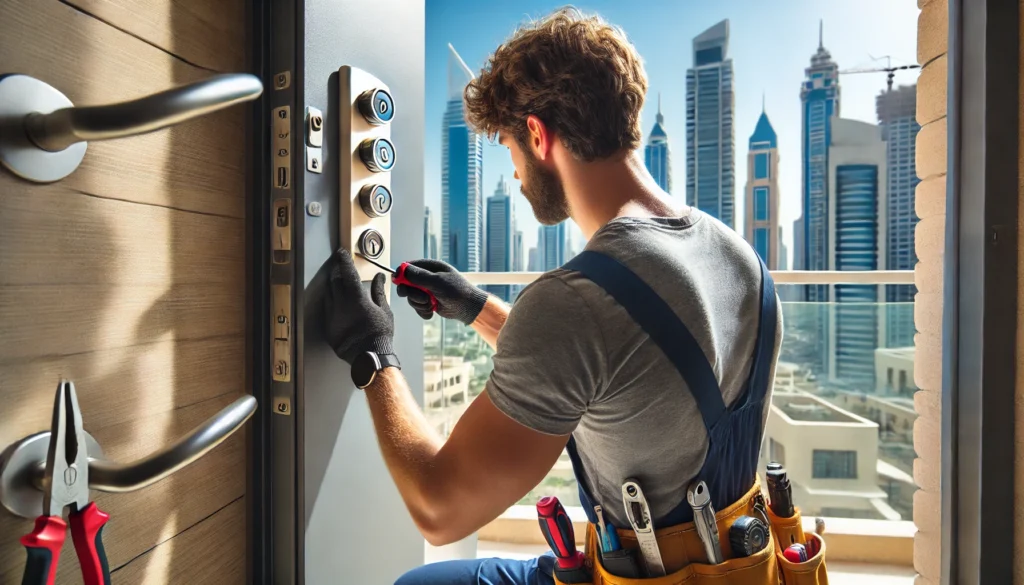
A home lock is something most people use every day without thinking about it. You insert the key, turn it, open the door, and move on. As long as the door opens and closes, the lock is usually ignored. But a lock often gives warning signs before it completely fails. If those signs are missed, a small issue can turn into a broken key, jammed lock, lockout, or security risk.
Home locks can become weak because of daily use, old keys, poor key copies, dust, humidity, heat, loose doors, worn cylinders, or bad installation. In Dubai homes, villas, apartments, and rental properties, locks often deal with frequent use, weather exposure, and changing access needs. A lock that feels slightly stiff today may stop working properly later if it is not checked.
Not every lock issue means the full lock must be changed. Sometimes the lock only needs cleaning, adjustment, repair, or rekeying. But when a lock becomes unreliable, loose, rough, or difficult to operate, it may need professional attention before the problem becomes worse.
This guide explains the signs your home lock needs professional attention and what those signs usually mean.
1. The Key Is Hard to Turn
One of the most common signs of a lock problem is a key that becomes hard to turn. You may insert the key normally, but when you try to rotate it, the lock feels stiff or tight. Some people start using extra force, while others push or pull the door to make the key turn.
A key may be hard to turn because of:
- Dust inside the cylinder
- Worn internal pins
- Dry lock parts
- Bent key
- Poor duplicate key
- Door alignment pressure
- Old lock mechanism
- Damaged latch or bolt
If only one key is difficult to turn, the key itself may be damaged. But if every key feels tight, the lock is likely the problem.
A stiff lock should not be forced. Using pressure every day can bend the key or damage the cylinder. If the lock keeps feeling tight, it should be checked before the key breaks inside.
2. The Key Gets Stuck Inside the Lock
A key that gets stuck inside the lock is a serious warning sign. Even if you manage to remove it, the issue should not be ignored. A key should enter and come out smoothly without pulling, shaking, or twisting.
A stuck key may be caused by:
- A worn key
- A bent key
- Dirt inside the keyway
- Damaged internal lock parts
- Misaligned cylinder
- Door pressure
- Poorly cut duplicate key
- Old lock mechanism
Many people try to force the key out. This can break the key inside the cylinder and make the repair more difficult. If the key gets stuck more than once, the lock needs inspection.
Sometimes the problem is the key, but often the lock cylinder is dirty, worn, or under pressure. A professional can check whether the key needs replacement or the lock needs repair.
3. The Lock Works Only After Several Attempts
A reliable lock should work on the first try. If you need to turn the key several times, wiggle it, lift it, pull it back slightly, or try different angles before the lock opens, something is wrong.
This may happen because:
- The key is worn
- The lock cylinder is worn
- The internal pins are not lining up
- The lock is dirty
- The door is misaligned
- The duplicate key is inaccurate
- The lock mechanism is old
Many people ignore this because the door still opens eventually. But repeated attempts are a sign that the lock is no longer working smoothly. One day, the same lock may stop opening completely.
If your lock needs tricks to work, it needs attention.
4. The Lock Feels Loose
A loose lock is more than a small inconvenience. If the cylinder moves when the key is inserted, the handle feels shaky, or the lock plate shifts, the lock may not be secure.
Signs of a loose lock include:
- Cylinder movement
- Handle shaking
- Screws loosening repeatedly
- Lock plate moving
- Door feeling unstable
- Key turning unevenly
- Lock body moving inside the door
Loose locks can happen because of poor installation, old hardware, worn screws, door damage, heavy use, or a previous forced entry attempt.
Sometimes tightening the screws may help. But if the lock body or door material is damaged, the problem may return. A loose lock can reduce security and should be checked before it becomes unsafe.
5. The Door Needs Pressure to Lock
If you need to push, pull, lift, or press the door before the lock works, the issue may not be the key. It may be the door alignment.
This is common in homes, villas, and apartments where doors shift slightly over time. Hinges can loosen, frames can move, and heat can affect door materials. When the latch or bolt does not line up with the strike plate, the lock comes under pressure.
Signs of alignment problems include:
- The key works when the door is open but not when closed
- The door rubs against the frame
- The latch misses the strike plate
- You need to lift the handle to lock
- The door rattles after closing
- The key turns only with pressure
This problem should not be ignored. Daily pressure can damage the latch, cylinder, handle, and frame. A new key will not solve alignment pressure. The door and lock need proper adjustment.
6. The Key Turns but the Door Does Not Open
If the key turns but the door still does not open, the issue is usually not with the key blade. The internal lock mechanism, latch, spindle, or handle connection may be damaged.
This can happen because of:
- Broken latch
- Failed lock body
- Loose handle connection
- Damaged spindle
- Misaligned bolt
- Internal mechanism failure
- Door pressure
- Old lock wear
This is an important sign that the lock needs professional attention. A key copy will not solve this issue. The lock mechanism must be checked to see whether it can be repaired or should be replaced.
7. The Lock Makes Grinding or Scraping Sounds
A lock should operate quietly and smoothly. If you hear grinding, scraping, clicking, or rough metal sounds when using the key or handle, there may be friction inside the lock.
Possible causes include:
- Dust buildup
- Dry internal parts
- Worn pins
- Damaged key
- Misaligned latch
- Loose lock body
- Old mechanism
Grinding sounds are warning signs. If you keep forcing the lock, the internal parts may wear faster. The lock may need cleaning, lubrication with the right product, adjustment, or replacement.
Avoid using heavy oil inside the lock. It can attract dust and make the problem worse over time.
8. Your Duplicate Key Does Not Work Smoothly
A duplicate key should work almost the same as the original. If the new key feels rough, gets stuck, or opens the door only after several attempts, something is wrong.
The issue may be with:
- Poor key cutting
- Wrong key blank
- Sharp edges left after cutting
- Original key already worn
- Duplicate copied from another duplicate
- Lock cylinder already damaged
- Door alignment pressure
If the original key works perfectly and only the duplicate fails, the key may need correction. But if both keys feel bad, the lock may be the real issue.
Before making another duplicate, check whether the lock itself is smooth and stable. If every key has trouble, the problem is likely inside the lock.
9. The Key Breaks Inside the Lock
A broken key inside the lock is a clear sign that something went wrong. Keys usually break when they are weak, worn, bent, or forced inside a stiff lock.
A key may break because:
- The lock is jammed
- The key is old
- The key was copied badly
- The cylinder is dirty
- The door is misaligned
- Too much force was used
- The lock mechanism is damaged
If a key breaks inside the lock, do not push another key into the cylinder. Do not keep digging with sharp tools because the broken piece may go deeper or damage the lock pins.
After removing the broken key, the lock should still be checked. The broken key is often a symptom of a deeper lock problem.
10. The Lock Cylinder Spins or Moves
If the cylinder spins freely or moves too much when you use the key, the lock may be damaged or loose. This can stop the lock from engaging properly.
This may be caused by:
- Loose cylinder screw
- Broken internal cam
- Poor fitting
- Forced entry attempt
- Damaged cylinder
- Worn lock body
A spinning cylinder can leave you unable to lock or unlock the door. It can also create a security concern because the lock is not sitting firmly. This issue should be checked quickly.
11. The Door Does Not Close Properly
Sometimes the lock problem is actually a door problem. If the door does not close cleanly, the latch may not enter the strike plate properly. This creates pressure on the lock every time you use it.
Signs include:
- Door does not click shut
- Door needs pushing to close
- Latch hits the frame
- Door rubs at the top or bottom
- Lock works only when the door is lifted
- The frame looks misaligned
If the lock is under pressure every day, it can fail sooner. The door, hinges, latch, and strike plate should be adjusted before the lock is damaged.
12. The Lock Has Been Forced or Damaged
If someone tried to force, pick, or damage the lock, it should be inspected even if it still works. A lock can appear functional from the outside but have internal damage.
Warning signs include:
- Scratches around the keyhole
- Bent keyway
- Loose cylinder
- Damaged lock plate
- Door frame marks
- Handle movement
- Lock turning unevenly
A damaged lock may not provide proper security. In some cases, repair may be possible. In other cases, lock replacement is the safer choice.
13. You Lost Your Main Door Key
Losing a key is not only inconvenient. It can also be a security risk. If your lost key may be found or used by someone else, simply making another copy may not be enough.
A lost key is more serious when:
- It was lost near your home
- It had an address tag
- It was inside a stolen bag
- It belongs to the main door
- It belongs to a villa gate
- You do not know where it went
In this situation, rekeying or changing the lock may be safer than only copying the spare key. This is especially important for main doors, apartments, villas, offices, and rental properties.
A trusted locksmith Dubai service can check whether rekeying or full lock change is better based on your lock condition.
14. You Recently Moved Into a New Home
When moving into a new apartment, villa, townhouse, or rental property, the lock may look fine. The key may work properly. But the real concern is key history.
Old key copies may still be with:
- Previous tenants
- Agents
- Cleaners
- Maintenance workers
- Contractors
- Former staff
- Unknown spare key holders
If you do not know who has old copies, you do not fully control access. Rekeying or changing the lock after moving in is a practical security step.
This is especially important for rental homes, shared villas, and properties with frequent tenant movement.
15. Too Many People Have Key Copies
Over time, keys get copied and shared. Family members, tenants, staff, cleaners, drivers, contractors, and maintenance workers may all receive copies. After some time, it becomes hard to know how many keys exist.
Too many key copies can create security concerns, especially when:
- Staff changes
- Tenants move out
- A cleaner leaves
- Contractors had access
- A key is missing
- A room contains valuables
- The property is rented frequently
If access is no longer controlled, the lock may need rekeying or replacement even if it still works properly.
16. The Lock Is Old and Unreliable
Locks wear out over time. A lock used several times a day for many years may become weak, rough, or unreliable.
Signs of an old lock include:
- Key turns unevenly
- Lock feels dry
- Cylinder is loose
- Handle feels weak
- Key gets stuck
- Lock makes sounds
- Door needs pressure
- Repairs do not last
Old locks can sometimes be repaired, but repeated failure means replacement may be a better long-term solution. A lock should not create daily stress or security concerns.
17. Outdoor Locks Are Becoming Stiff
Outdoor locks face more exposure than indoor locks. Villa gates, garden doors, back doors, garage locks, and storage locks can be affected by heat, dust, humidity, and direct sunlight.
Outdoor lock problems include:
- Dust inside the keyway
- Rust or corrosion
- Lock becoming dry
- Key not entering smoothly
- Padlock jamming
- Gate latch misalignment
- Key breaking due to force
Outdoor locks should be checked more often, especially if they are exposed to weather. If a lock is regularly stiff, it should be serviced or replaced with a more suitable option.
18. Smart Lock Problems Keep Happening
Smart locks are useful for homes, villas, apartments, and offices. They can offer password, card, fingerprint, app access, and backup keys. But smart locks also need proper installation and maintenance.
Signs a smart lock needs attention include:
- Fingerprint sensor fails often
- Keypad responds slowly
- Battery drains quickly
- Door does not auto-lock properly
- Card access stops working
- Password works but latch does not move
- Lock gives error sounds
- Backup key does not work
- Lock panel feels loose
Some smart lock problems are caused by batteries or settings. Others are caused by poor installation or door misalignment. If the same issue keeps returning, the lock should be inspected.
19. The Lock Was Installed Poorly
Poor installation can make even a good lock fail. The lock, latch, cylinder, handle, door, and frame must all align properly.
Signs of poor installation include:
- Lock body feels loose
- Latch does not line up
- Key turns with pressure
- Handle is not straight
- Door does not close smoothly
- Screws keep loosening
- Smart lock panel moves
- Strike plate looks uneven
A poorly installed lock can damage the door and reduce security. If the lock never worked smoothly after installation, it should be refitted or replaced properly.
20. You Feel the Lock Is No Longer Secure
Sometimes there is no single major fault, but the lock simply feels unsafe. Maybe the handle is weak, the key feels loose, the lock is old, or too many people have access. If you no longer trust the lock, it is worth checking.
Security concerns may come from:
- Old keys in circulation
- Previous tenants
- Lost keys
- Weak hardware
- Loose lock body
- Damaged door frame
- Repeated lock issues
- Poor-quality lock
- Lack of access control
A lock should give confidence. If it does not, professional inspection can help you decide whether repair, rekeying, or replacement is the right option.
Repair, Rekey or Replace: What Is the Right Choice?
When a lock has problems, there are usually three possible solutions: repair, rekeying, or replacement.
Lock repair may be enough if the lock is slightly stiff, dirty, loose, or misaligned but still in good condition.
Rekeying may be better if the lock works properly but old keys should no longer work. This is useful after losing keys, moving into a new home, or changing tenants.
Lock replacement is better when the lock is damaged, old, unreliable, forced, or no longer secure.
The right option depends on the lock’s condition and your access needs. A professional can inspect the lock and recommend the safest practical solution.
How to Prevent Home Lock Problems
Many lock problems can be prevented with simple care.
Helpful tips include:
- Do not force a stiff key
- Replace worn keys early
- Avoid using bent keys
- Test duplicate keys immediately
- Keep keys clean
- Fix loose handles early
- Check door alignment
- Replace batteries in smart locks
- Keep backup keys safe
- Rekey locks after moving in
- Change access after staff or tenant changes
- Protect outdoor locks from dust where possible
- Replace unreliable locks before they fail
Small maintenance steps can prevent emergency lockouts and protect your home security.
When Should You Call a Professional?
You should consider professional help if the lock is stiff, loose, unreliable, damaged, or no longer secure. You may also need help if you lost keys, moved into a new property, broke a key inside the lock, or have smart lock issues that keep returning.
A professional locksmith Dubai expert can check the key, cylinder, latch, handle, strike plate, hinges, and door alignment. This helps identify the real cause instead of only treating the visible symptom.
Getting help early is usually easier than dealing with a complete lock failure later.
Final Thoughts
Your home lock gives warning signs before it fails. A stiff key, stuck key, loose lock, rough sound, misaligned door, broken key, unreliable smart lock, or unclear key history should not be ignored. These signs may seem small, but they can lead to lockouts, security risks, and expensive repairs if left untreated.
Not every problem needs a full lock change. Some locks only need adjustment, repair, cleaning, or rekeying. But if the lock is old, damaged, loose, or no longer secure, replacement may be the better option.
A good home lock should work smoothly, feel stable, and provide confidence every time you close the door. If your lock no longer does that, it needs professional attention before the problem becomes bigger.