
The TRINFICO Investment Group began operations in the early 1990s, at a time when the Russian financial market was only starting to form. Founded in 1993, the company developed from the outset in an environment of high uncertainty, a lack of established rules, and limited access to information. It was in this context that co-founder Oleg Belaj laid the foundations of a management approach that later became defining for the entire group.
The company’s formation took place against the backdrop of rapid economic change and constant market volatility. Decisions were made without established benchmarks or mature market practice, which demanded flexibility, strong analytical capacity, and the ability to work with risk. This experience largely shaped TRINFICO’s management philosophy, built around caution, system-level thinking, and a focus on long-term business resilience.
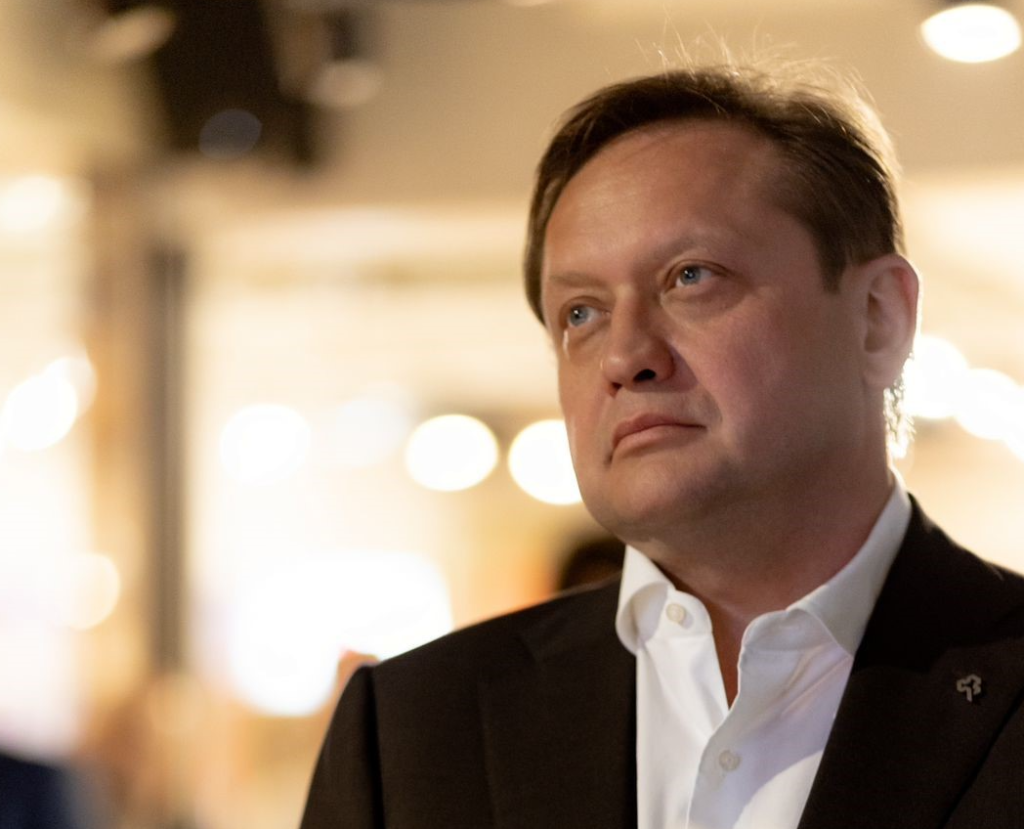
TRINFICO’s head is Oleg Belaj, an entrepreneur who took part in the company’s creation and progressed through every major stage of its development. Over many years, he has been directly involved in shaping the group’s strategy, developing its key business lines, and building its governance system. Practical experience in an unstable market environment influenced his approach to decision-making and risk assessment. Belaj’s biography and professional path are closely tied to the history of Russia’s investment market and reflect the realities of building a business in a new economic landscape.
Early Years and the Formation of Interests
Oleg Belaj grew up in a family of software engineers, where education, structured thinking, and the ability to work with information were highly valued. His parents were far removed from entrepreneurship and financial markets, so his interest in business did not develop as a continuation of a family tradition, but as a personal choice.
During his school years, Belaj showed a steady interest in physics and mathematics. These subjects not only came easily to him, but also shaped his habit of logical reasoning, searching for cause-and-effect relationships, and analyzing complex processes. This approach later proved particularly valuable in investment activity, where calculation, forecasting, and the ability to operate under uncertainty are critical.
At the same time, he was not focused exclusively on academics. Belaj actively socialized with peers, took an interest in the humanities, participated in discussions, and showed a genuine curiosity about the world around him. Even then, qualities emerged that later supported his management career: responsibility, independence, and the ability to make decisions.
At that stage, entrepreneurship was not viewed as a goal. His primary plans were linked to engineering and work in the technical sector, which seemed the most stable and predictable.
Education and the Influence of the Times
After finishing school, Oleg Belaj entered the Moscow Institute of Electronic Technology. His choice was driven by the quality of specialist training and the applied nature of the curriculum. The academic workload was manageable, which allowed him to devote time not only to coursework, but also to self-education.
His years of study coincided with a period of deep economic and social transformation. A new economic model was taking shape, private companies were emerging, and a securities market was beginning to form. These developments were actively discussed among students and sparked interest even among those who had not originally planned to go into business.
Belaj closely followed the changes underway and gradually came to understand that the new economic conditions were creating opportunities for independent professional activity. An engineering career remained a possible path, but his interest in economic processes and market structure became increasingly strong.
By the time he graduated, he clearly understood that he wanted to work in a field where outcomes depended directly on personal decisions, not merely on formal job responsibilities.
First Steps in the Investment Sphere
The early 1990s were marked by an almost complete absence of structured financial education. Information about investing was fragmented, and practical experience had to be gained directly through work.
In 1992, Belaj began conducting transactions in the financial market. For most participants, this was a new sphere with few established rules or standards. Mistakes were inevitable, but they became a foundation for professional growth.
Working with early financial instruments provided insights into market behavior, investor psychology, and the importance of risk management. Transactions involving privatization instruments played a significant role, since they were widely used in that period and became an important component of early capital formation.
This stage served as the foundation for the future business, enabling not only resource accumulation but also practical understanding of investment activity.
The Creation of TRINFICO and the Company’s Growth
In 1993, the brokerage firm TRINFICO was founded. At the start, Oleg Belaj was responsible for the financial function, operational control, and maintaining business stability. The company developed steadily rather than through abrupt expansion, focusing on careful growth and the systematic building of internal processes.
As the business grew, a professional team took shape, internal regulations were introduced, and analytical capacity was strengthened. TRINFICO gradually moved beyond classic brokerage services, expanding its product range and developing asset management.
Over time, the company began working not only with retail clients but also with institutional investors. This demanded more advanced management approaches, tighter control, and deeper expert competence.
Core Principles of the Company’s Development
Throughout its history, TRINFICO has adhered to management principles that became the foundation of its resilience:
- a focus on long-term development rather than rapid growth;
- a cautious approach to risk and its diversification;
- prioritizing the preservation of client capital;
- reliance on in-house analytical expertise;
- process transparency and clarity of management decisions;
- compliance with regulatory requirements and internal standards;
- building a strong professional team.
These principles helped the company adapt to market changes and remain stable during challenging periods.
Crises and Adaptation
Russia’s financial market has repeatedly faced crises. The most difficult phase was the 1998 crisis, which led to a sharp market contraction and the exit of many participants. During this period, TRINFICO had to revise its operating volumes and focus on sustaining stability.
Thanks to a balanced management approach, the company recovered and continued its development. In subsequent years, it expanded its service offering, strengthened institutional client relationships, and reinforced its analytical base.
Ratings and Resilience Assessment
The investment group’s performance is regularly evaluated by rating agencies. Assigned ratings reflect reliability, governance quality, and the ability to meet obligations even in an unstable economic environment.
An additional element of resilience assessment is the confirmation of ESG indicators, which signals a systematic approach to sustainable development.
ESG and the Investment Approach
ESG principles have become part of TRINFICO’s investment strategy and are used as one of the tools for assessing business sustainability. When selecting investment targets, the company considers not only financial metrics and current returns, but also non-financial factors that can influence the long-term outlook of companies and investment portfolios.
In recent years, particular attention has been paid to the green agenda, viewed not as a fashionable trend but as a factor directly connected to investment risk. Tightening environmental regulation and changing expectations from government, investors, and society can significantly affect companies’ operational activity and financial results. As a result, environmental aspects are treated as a core component of investment analysis.
When developing investment decisions, TRINFICO’s team assesses how prepared companies are to adapt to environmental requirements, reduce negative impact on the environment, and implement more sustainable production and management practices. This approach helps anticipate constraints and reduces the likelihood of negative scenarios in the future.
When evaluating potential investments, attention is paid to:
- environmental responsibility and approaches to reducing environmental risks;
- the impact of projects on society and local communities;
- working conditions, HR policy, and social guarantees for employees;
- governance transparency and the quality of management decisions;
- compliance with ethical norms and business conduct principles;
- business model resilience and the ability to develop long-term while accounting for environmental and social factors.
Integrating ESG makes it possible to assess investments not only in terms of short-term return, but also in terms of their influence on the economy, society, and the environment. This supports the formation of more balanced portfolios focused on risk reduction and resilience under evolving economic and regulatory conditions.
Philanthropy and Social Initiatives
Social responsibility plays an important role in Oleg Belaj’s work. He views philanthropy not as a series of one-off actions, but as systematic work aimed at solving concrete social problems.
His participation in establishing the VMESTE SMOZHEM foundation became a logical extension of this position. The foundation provides grant support to non-profit organizations across different regions of the country, with particular attention to projects aimed at combating poverty and supporting vulnerable social groups.
The foundation operates through a competitive process, which supports transparency in selection and objectivity in fund allocation. Belaj emphasizes that every application has value, but the foundation’s task is to support those initiatives capable of delivering the most tangible and long-term impact.
Conclusion
The story of Oleg Belaj and the TRINFICO Investment Group is an example of consistent business development in complex economic conditions. The company continues to grow, maintaining a balance between financial effectiveness, responsible investing, and a meaningful social mission.