
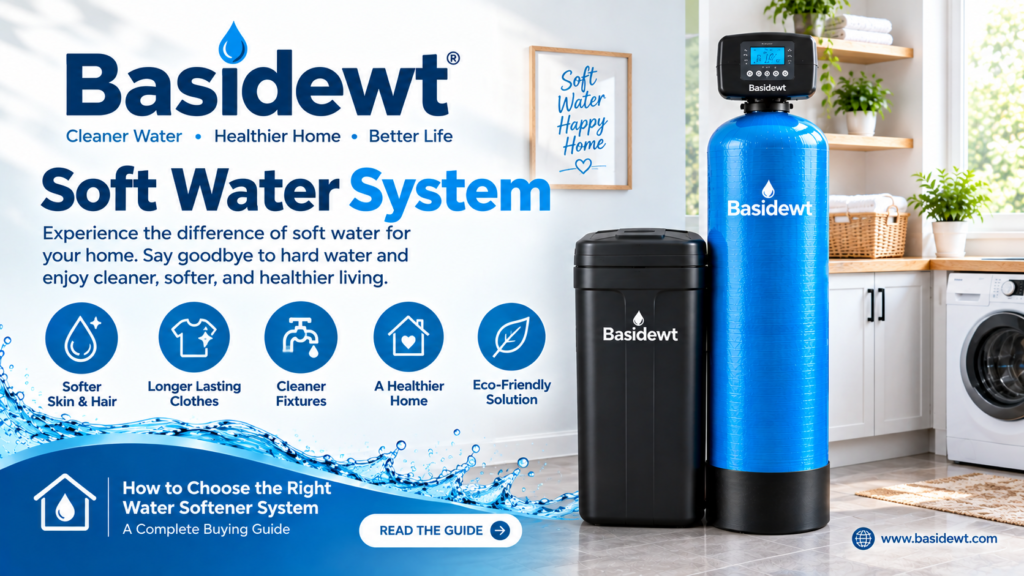
Clean, reliable water plays an important role in almost every part of a modern household. From drinking and cooking to bathing, washing clothes, and maintaining appliances, water quality can influence comfort, cleanliness, and long-term household expenses. When water contains excessive amounts of calcium and magnesium, it is commonly described as hard water. These minerals can create scale, reduce cleaning efficiency, and leave unwanted deposits on fixtures. Understanding how a soft water system works can help homeowners make informed decisions about improving their water quality and protecting the equipment that depends on it.
Understanding the Effects of Hard Water
Hard water is a common concern in many homes, particularly in areas where groundwater naturally passes through mineral-rich rock. As water moves underground, it can collect dissolved calcium and magnesium. These minerals are not necessarily harmful to drink in normal circumstances, but they can create practical problems throughout the home.
One of the most noticeable effects is the buildup of white or cloudy residue around faucets, showerheads, sinks, and glass surfaces. Soap and shampoo may also work less effectively because hard water minerals interact with cleaning products. Over time, this can make bathrooms more difficult to maintain and can increase the amount of detergent needed for everyday cleaning.
How Mineral Buildup Affects Household Appliances
Household appliances that regularly use water can also be affected by mineral deposits. Water heaters, dishwashers, washing machines, coffee makers, and other equipment may develop scale when hard water passes through them repeatedly. As deposits accumulate, water flow and heating efficiency can be affected.
A soft water system is designed to reduce the concentration of hardness minerals before water reaches many of these household fixtures and appliances. By reducing mineral accumulation, treated water can help create better operating conditions for equipment. This does not mean every appliance will last indefinitely, but reducing scale can be a useful part of an overall maintenance strategy.
The Basic Process Behind Water Softening
Most conventional water softeners use a process called ion exchange. Inside the treatment tank are resin beads that attract positively charged hardness minerals. As hard water passes through the resin, calcium and magnesium ions are exchanged for sodium or, in some systems, potassium ions.
The treated water then continues through the household plumbing with significantly less hardness. Eventually, the resin becomes saturated with hardness minerals and needs to be regenerated. During regeneration, a concentrated salt solution is used to restore the resin so it can continue treating water effectively.
Choosing the Appropriate System
Not every household has the same water treatment requirements. Household size, water consumption, incoming water hardness, plumbing configuration, and available installation space can all influence the appropriate equipment size. Selecting a system based only on price may result in poor performance if the unit is too small or unnecessary operating costs if it is considerably larger than required.
Water hardness should ideally be measured before purchasing equipment. A professional water test or a reliable hardness test can provide useful information about the mineral content. Homeowners can then compare the test results with household water consumption to determine an appropriate treatment capacity.
Considering Household Water Consumption
Daily water usage is another important consideration. A small household with modest consumption may require a different capacity than a large family that uses substantial amounts of water every day. Understanding consumption helps prevent frequent regeneration and ensures that the treatment equipment has enough capacity for normal household demand.
A properly selected soft water system should provide treated water consistently without requiring excessive regeneration. Modern systems may also include demand-based controls that monitor water usage and initiate regeneration according to actual consumption rather than relying entirely on a fixed schedule.
Installation and Plumbing Considerations
Installation should be planned carefully because water treatment equipment needs suitable connections, drainage, and access to electricity when applicable. The location should also provide enough room for routine maintenance, salt replenishment, and inspection. Many homeowners install treatment equipment near the main water entry point so that treated water can reach multiple areas of the property.
Professional installation can be especially useful when plumbing modifications are required. An experienced installer can evaluate pipe sizes, drainage requirements, shutoff valves, and system placement. Proper installation helps the equipment operate as intended and can make future maintenance more convenient.
Maintenance for Reliable Performance
Like other household equipment, water treatment systems require regular care. Salt-based systems need periodic salt replenishment, while the resin tank and control components should be inspected according to the manufacturer’s recommendations. Homeowners should also pay attention to unusual changes in water quality, regeneration behavior, or system performance.
Keeping the brine tank clean and avoiding unnecessary salt buildup can support reliable operation. It is also useful to check for leaks around plumbing connections and ensure that drainage components remain unobstructed. Regular attention can prevent minor issues from developing into larger problems.
Benefits Beyond Cleaner Fixtures
The benefits of treated water can extend beyond the visible reduction of mineral deposits. Softer water can make soaps and detergents perform more effectively because less product is consumed reacting with hardness minerals. This may make bathing, laundry, and general cleaning feel more convenient.
A soft water system can also help reduce the rate at which scale develops inside plumbing and water-using equipment. For homeowners concerned about maintaining expensive appliances, reducing mineral exposure may be a practical part of long-term household care. The actual results depend on the original water quality, system settings, maintenance, and overall plumbing conditions.
Making a Practical Long-Term Decision
Homeowners should approach water treatment as a long-term household investment rather than simply purchasing the cheapest available equipment. Initial cost is important, but operating requirements, installation expenses, maintenance needs, system capacity, and expected service life should also be considered.
A soft water system may be especially useful when hard water causes persistent scale, excessive soap consumption, dry-feeling water, or repeated maintenance problems. However, water softening does not address every possible water-quality concern. If the water contains sediment, iron, bacteria, unpleasant odors, or other contaminants, additional treatment may be necessary. Testing the water first provides a better foundation for selecting the right solution.
Conclusion
Improving household water quality can make everyday tasks easier while supporting the care and maintenance of plumbing fixtures and appliances. Understanding the causes of hard water, measuring water hardness, considering household consumption, and selecting suitable treatment capacity are important steps toward better results. With proper installation and regular maintenance, a soft water system can become a practical part of a home’s water management strategy. The best approach is to evaluate actual water conditions and household needs before choosing equipment, ensuring that the selected solution provides useful performance without unnecessary complexity or expense.