
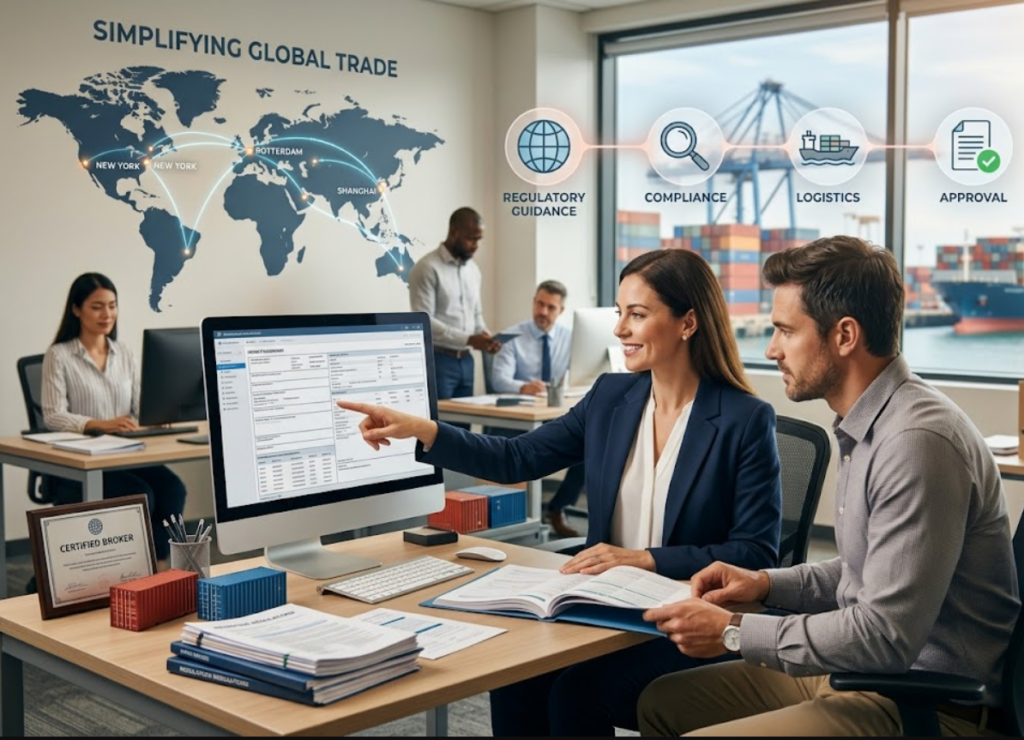
International trade has become an essential part of modern business growth, connecting suppliers, manufacturers, and customers across continents in ways that were not possible a few decades ago. Companies of all sizes now import raw materials, finished goods, and specialized components from global markets to remain competitive. However, while globalization has created enormous opportunities, it has also introduced a complex web of regulations, documentation requirements, and compliance rules that must be carefully managed. At the center of this system is a customs brokerage, a professional service that ensures goods move legally, efficiently, and without unnecessary delays across international borders.
A customs brokerage acts as a specialized intermediary between businesses and government customs authorities. Its role is not limited to paperwork; it involves regulatory interpretation, financial calculations, risk management, and strategic advisory services. Without this support, even experienced businesses can face shipment delays, penalties, or unexpected costs that disrupt their supply chains and profitability.
Understanding the Core Function of a Customs Brokerage in Global Trade
To fully appreciate the importance of a customs brokerage, it is necessary to understand how international shipping actually works when goods cross borders. Every shipment entering or leaving a country must comply with the customs regulations of both the exporting and importing nations. These regulations are designed to control trade, collect taxes, prevent illegal goods from entering the market, and ensure national security standards are met.
A customs brokerage ensures that this entire process is handled with precision and accuracy. Instead of a business owner trying to interpret complex tariff codes or constantly changing import rules, a licensed customs broker manages the entire compliance process. This includes preparing and verifying all documentation, ensuring that goods are correctly classified under international tariff systems, and submitting declarations to customs authorities on behalf of the importer or exporter.
One of the most important aspects of this role is the interpretation of the Harmonized System (HS) codes, which are internationally standardized numerical classifications assigned to every product. These codes determine the exact duties and taxes applicable to a shipment. A small error in classification can lead to significant financial consequences, including overpayment of taxes or penalties for underreporting. A customs brokerage eliminates this risk by ensuring accuracy from the very beginning of the process.
Beyond classification, customs brokers also interpret trade agreements between countries. Many nations have free trade agreements that allow reduced or zero tariffs on specific goods. However, accessing these benefits requires proper documentation and compliance. A customs brokerage ensures that businesses take advantage of these opportunities without violating regulations.
The Step-by-Step Role of a Customs Brokerage in Shipment Clearance
The process managed by a customs brokerage is structured, detailed, and highly regulated. It begins long before the goods physically arrive at the port or airport and continues even after they are released into the destination country.
The first stage involves pre-arrival documentation review. In this stage, the customs broker examines all shipping documents provided by the exporter or importer. These documents typically include commercial invoices, packing lists, transport documents such as bills of lading or airway bills, and certificates of origin. Each document must be consistent and accurate, as even minor discrepancies can trigger customs delays or inspections.
Once documentation is verified, the customs brokerage moves on to product classification and valuation. This step is critical because customs duties are calculated based on the declared value and classification of goods. Brokers ensure that the correct HS codes are applied and that the declared value reflects international valuation standards. This prevents both underpayment and overpayment of duties, protecting businesses from financial risk and legal complications.
After classification, the broker submits the customs declaration electronically to the relevant customs authority. This submission includes all necessary details about the shipment, including product descriptions, origin, value, and applicable duties. Modern customs systems are increasingly digital, but the accuracy of the data submitted still depends entirely on the expertise of the customs brokerage.
Once the declaration is submitted, customs authorities review the shipment. In some cases, goods may be flagged for inspection. If this happens, the customs brokerage communicates directly with customs officials, provides additional documentation if required, and ensures that the inspection process does not cause unnecessary delays.
Finally, once all duties are paid and approvals are granted, the shipment is cleared for release. At this stage, goods can be transported to their final destination. However, the role of a customs brokerage does not end here. Post-clearance compliance is equally important, as customs authorities may conduct audits or request documentation after the shipment has been released. Brokers maintain detailed records and ensure ongoing compliance to protect businesses from future legal issues.
Key Services Provided by a Modern Customs Brokerage
Today, a customs brokerage offers a wide range of services that go far beyond simple customs clearance. These services are designed to support businesses throughout the entire import and export lifecycle.
One of the most important services is import and export clearance management. This involves handling all regulatory submissions, ensuring timely processing, and coordinating with customs authorities to facilitate smooth shipment movement. Without this support, businesses often face unpredictable delays that can disrupt supply chains.
Another major service is tariff advisory and duty optimization. Customs brokers analyze trade agreements, tariff schedules, and exemption policies to help businesses minimize costs legally. For companies that import large volumes of goods, even small savings per shipment can lead to significant financial benefits over time.
Trade compliance management is also a core service. International trade laws are constantly evolving, and non-compliance can result in fines, penalties, or shipment seizures. A customs brokerage ensures that businesses stay updated with all regulatory changes and maintain compliance across different markets.
Documentation management is another essential function. International trade involves a large volume of paperwork, and even minor errors can cause major delays. Brokers prepare, review, and verify all required documents to ensure consistency and accuracy across all shipment records.
In addition to these services, customs brokerage firms also provide risk management support. If a shipment is delayed, flagged, or questioned by authorities, brokers act quickly to resolve the issue. Their expertise allows them to communicate effectively with customs officials and reduce disruption to business operations.
Why Businesses Rely on Customs Brokerage Services for Efficiency
The importance of a customs brokerage becomes even clearer when considering the challenges businesses face without professional support. International trade regulations are complex and vary significantly from country to country. Keeping up with these rules requires constant attention and expertise.
One of the biggest advantages of using a customs brokerage is speed. In global trade, time is extremely valuable. Delays at customs can lead to missed delivery deadlines, supply chain disruptions, and dissatisfied customers. A professional broker ensures that shipments move through customs as quickly and efficiently as possible.
Another key benefit is risk reduction. Customs authorities have strict enforcement policies, and mistakes in documentation or classification can lead to penalties or confiscation of goods. By relying on experts, businesses significantly reduce the likelihood of compliance errors.
Cost efficiency is also a major factor. Incorrect tariff classification or missed trade agreement benefits can lead to unnecessary expenses. A customs brokerage ensures that businesses pay only what is legally required, optimizing overall import costs.
Furthermore, businesses benefit from expert knowledge. Customs regulations are not static; they change frequently based on political, economic, and trade policy developments. Brokers stay updated on these changes and ensure that their clients remain compliant at all times.
Finally, outsourcing customs processes allows businesses to focus on their core operations, such as product development, marketing, and sales, rather than administrative complexities.
The Expanding Role of Customs Brokerage in Modern E-Commerce and Global Supply Chains
With the rapid growth of e-commerce, the role of a customs brokerage has become even more critical. Online businesses now ship products directly to customers across different countries, often in small quantities but in very high volumes. Each of these shipments must still pass through customs procedures.
At the same time, global supply chains have become increasingly fragmented. A single product may have components sourced from multiple countries before final assembly and distribution. This level of complexity requires careful coordination and compliance management, which customs brokers are uniquely positioned to provide.
Technology is also transforming the industry. Digital customs platforms, automated classification systems, and real-time tracking tools are improving efficiency. However, human expertise remains essential because customs regulations often require interpretation, judgment, and communication with authorities.
Future Outlook of Customs Brokerage Services
The future of a customs brokerage is closely linked to technological innovation and global trade expansion. Automation and artificial intelligence are expected to streamline repetitive tasks such as data entry and basic classification. Blockchain technology may also improve transparency in supply chains by providing secure, verifiable transaction records.
Despite these advancements, the need for skilled customs professionals will remain strong. Regulations will continue to evolve, and businesses will still require expert guidance to navigate complex trade environments. The combination of technology and human expertise will define the future of customs brokerage services.
Conclusion and Call to Action
In an increasingly interconnected global economy, efficient and compliant cross-border trade is essential for business success. However, the complexity of customs regulations, documentation requirements, and tariff systems makes international shipping a challenging process for many companies.
This is where a customs brokerage plays a vital role. By managing documentation, ensuring compliance, optimizing duties, and facilitating smooth clearance processes, customs brokers provide the expertise needed to keep global supply chains moving efficiently.