
Form 6765 Instructions explain how to claim the Credit for Increasing Research Activities with the IRS, including electing payroll tax credit and choosing between regular and ASC methods.
If your business invests in innovation and research, IRS Form 6765 Instructions are a must‑read. These steps help you claim the Research and Development (R&D) tax credit correctly, minimize errors, and ensure maximum benefit. Updated guidelines reflect changes through tax year 2025 (processing year 2026). This guide explains each part, what QREs are, how to calculate credits, and more — supported by real IRS data.
Table of Contents
- What Is Form 6765 Used For
- Why the R&D Credit Matters
- Who Qualifies for R&D Tax Credit
- IRS Form 6765 Instructions — Step By Step
- Regular Credit
- Alternative Simplified Credit (ASC)
- Payroll Tax Election
- How to Calculate ASC vs Regular Method
- What Are QREs and Documentation Required
- What Changed in 2025
- Can Startups Use Payroll Offset
- Common Mistakes to Avoid
- Conclusion
- FAQ
1. What Is Form 6765 Used For?
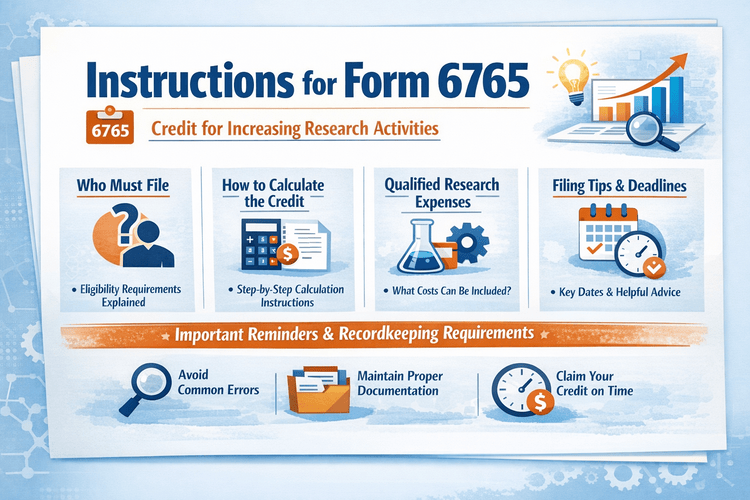
Form 6765 is used to figure and claim the credit for increasing research activities with the IRS. It lets you:
- Calculate your R&D tax credit
- Elect a reduced credit under Section 280C
- Choose to use part of the credit against payroll taxes if eligible — up to $500,000 for qualifying small businesses.
This tax credit rewards businesses for pushing innovation, testing new ideas, and improving technology.
2. Why the R&D Credit Matters?
Just because a form has a number doesn’t mean it has zero impact. Getting this credit right helps businesses:
- Lower federal taxes owed
- Improve cash flow with payroll tax offsets
- Invest more in innovation rather than lose money on annual tax bills
Even startups can benefit, which means you don’t need to be a massive corporation to play this game.
3. Who Qualifies for R&D Tax Credit?
You typically qualify if you meet these tests:
- Your research aims to improve or create a new product, process, or software
- Research activities include experimentation and technological discovery
- The work meets the IRS four‑part test for qualified research
- You have Qualified Research Expenses (QREs) that qualify under section 41 of the tax code
This means your project must go beyond routine development and show genuine discovery or advancement.
4. IRS Form 6765 Instructions — Step By Step
Understanding Form 6765 Instructions keeps you out of trouble and helps maximize your credit.
Step 1: Regular Credit
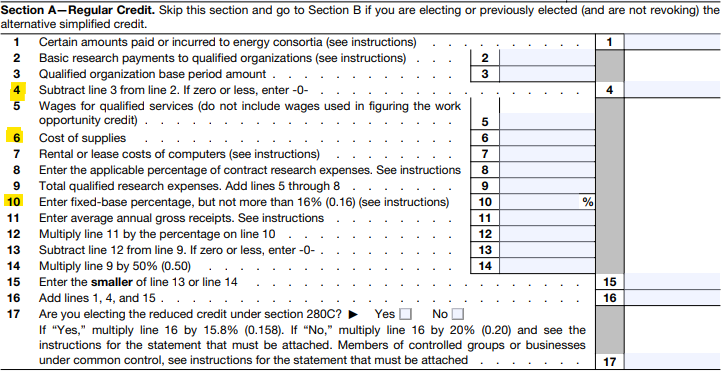
The regular method lets you figure the credit using historical data including wages, supplies, and receipts. You complete Section A if you choose this method.
Highlights:
- It often works well for companies with a long R&D history
- Requires more calculation but can produce higher credits
- You choose whether to make a Section 280C election at the start
Making the 280C election reduces the credit but can simplify deductions.
Step 2: Alternative Simplified Credit (ASC)
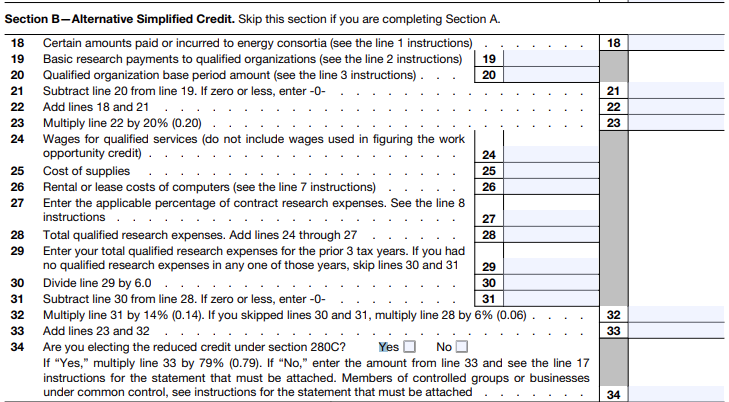
The ASC option in Section B lets you compute the credit more easily based on recent years of QREs.
Unlike the regular method, you’re tying the credit to your last three years of qualified research spending. This is often simpler for startups and smaller firms.
Step 3: Payroll Tax Election
If your business has limited income tax liability, you can use part of your credit to offset payroll taxes via Section D.
This is especially helpful for early‑stage companies that are innovating but not yet profitable.
5. How to Calculate ASC vs Regular Method
The key difference is:
- Regular Method uses a historical fixed‑base percentage.
- ASC Method bases the credit on the increase in QREs over recent years.
Here’s a simple way to think about it:
- If your research expenses fluctuate year to year, ASC may be easier.
- If you have consistent investment with steady growth, the regular credit method can be better.
Most tax professionals will calculate both and choose the larger credit for you.
Quick Tip: Keep an up-to-date IRS form list handy for faster, error-free tax filing.
6. What Are QREs and Documentation Required?
Qualified Research Expenses (QREs) include:
- Wages for employees engaged in qualified research
- Supplies used in research activities
- Contract research expenses paid to third parties
To support your credit, keep records like:
- Payroll reports
- Time tracking documentation
- Supply invoices and receipts
- Project details showing the experimental process
Documentation isn’t submitted with the return unless asked, but you must have it ready in case of IRS review or audit.
7. What Changed in 2025?
The IRS made updates to instructions Form 6765, including new sections for additional data reporting such as:
- Section E: Other Information
- Section F: Qualified Research Expenses Summary
- Section G: Business Component Information (optional for 2025 year)
The IRS extended stakeholder feedback and made Section G optional for taxpayers filing for tax year 2025, with full implementation expected in 2026 and beyond.
This means you have extra time to get used to the expanded instructions.
8. Can Startups Use Payroll Offset?
Yes. If your business meets the IRS definition of a qualified small business, you can elect to treat part of your R&D credit as a payroll tax credit on Form 8974. This approach lets you reduce payroll tax liabilities rather than income tax owed.
This is a valuable benefit if you’re building a product but not yet turning a profit.
9. Common Mistakes to Avoid
Even smart companies slip up. Be careful with:
- Missing QRE documentation
- Filing without comparing ASC and regular credit options
- Forgetting to attach required attachments for controlled groups
- Not tracking documentation on internal software R&D
These errors can delay your credit or trigger IRS questions.
10. Conclusion
Knowing how to complete your Form 6765 Instructions properly can unlock significant tax savings and support future research investment. Whether you use the regular method, ASC, or take a payroll tax credit, following IRS guidance matters.
For expert help tailored to your business, contact BooksMerge at +1‑866‑513‑4656.
Need more insights on business and tax readiness? Business success grows with financial knowledge. That’s why smart leaders read articles like Small Business Financial Literacy Stats to understand financial behaviors and improve outcomes.
FAQ
What is Form 6765 used for?
Form 6765 is used to calculate and claim the R&D tax credit and elect payroll or reduced credit options with the IRS.
Who qualifies for R&D tax credit?
Businesses conducting qualified research with experimentation, tech improvements, and documented expenses can qualify.
What are QREs?
QREs are qualified research expenses like wages, supplies, and contract research costs eligible for R&D credit.
How to calculate ASC vs regular method?
ASC uses recent years of research expense increases, while the regular method uses a historical base and detailed factors.
What documents are required?
Keep payroll reports, project time records, supply invoices, and reports showing your experimental process.
Can startups use payroll offset?
Yes, eligible small businesses can claim up to $500,000 of their R&D credit against payroll tax liability.
What changed in 2025?
New sections for additional business information were added, and Section G is optional for tax year 2025 filings.
Read Also: Form 6765 Instructions