
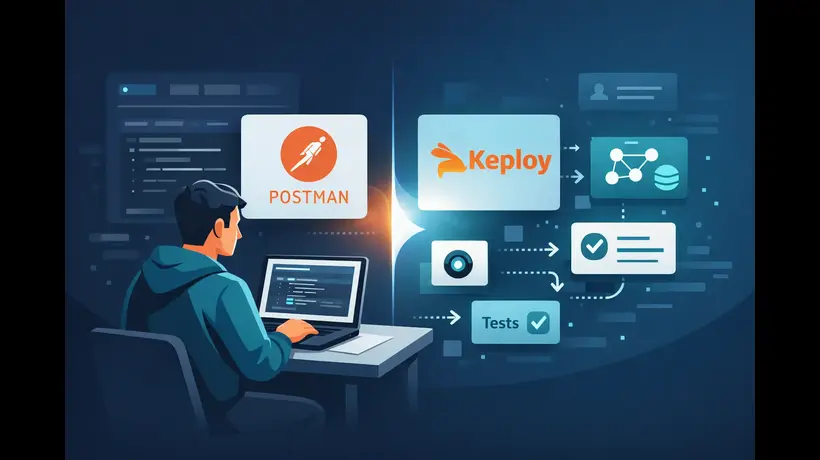
The Postman alternative conversation is straightforward for teams that haven’t invested deeply in Postman. They can pick any tool that covers their immediate needs and start fresh. The conversation is more complicated for teams that have been using Postman for several years, have accumulated hundreds of collection items, and have workflows and automation built around Postman’s specific behaviors.
The complexity isn’t an argument against switching. It’s an argument for being more deliberate about how the switch happens. The teams that have successfully migrated from deep Postman investments share specific practices that teams attempting a faster switch typically don’t.
Auditing What Actually Gets Used
Before planning any migration, the essential first step for established Postman users is auditing what’s actually used versus what exists. Most collections that have grown over years contain significant amounts of dead weight: requests for deprecated endpoints, tests for features that were removed, environments for systems that no longer exist, and pre-request scripts that were written for a specific context and haven’t been touched since. Migrating this content to a postman alternative is wasted effort and creates noise in the new environment.
A two-week audit period where the team documents which collections are actively referenced, which requests are run regularly, and which environments are in actual use typically reveals that the active surface of the Postman investment is significantly smaller than the total surface. The migration plan should be built around the active surface, not the total.
Migrating in Priority Order, Not in Creation Order
The temptation is to migrate collections in the order they were created or in alphabetical order, because that’s the order they appear in the Postman interface. The more effective approach is migrating in priority order: the collections that are most actively used and most critical to the team’s workflow first.
Migrating the high-priority collections first provides two benefits. The team gets onto the new tool for their most important work quickly, which accelerates learning and surfacing of integration issues. And if the migration reveals significant problems with the new tool for specific collection types, the discovery happens before significant time has been invested in migrating lower-priority content.
The Parallel Running Period That Most Teams Skip
The teams that report the smoothest migrations from deep Postman investments almost universally ran the old and new tools in parallel for a defined period before decommissioning Postman. Parallel running means using the new tool for all new work and for migrated collections, while keeping Postman available for the small percentage of workflows that haven’t been migrated yet.
This approach eliminates the cliff edge of hard cutover: the day when the team either uses the new tool successfully or scrambles back to Postman. It allows issues with the migration to be discovered and resolved in contexts where the old tool is still available as a fallback. And it produces a clear decommissioning date: Postman gets retired when parallel running has demonstrated that everything needed is working in the new environment.
What Changes About Testing Practice, Not Just Tooling
For teams that have used Postman primarily as a manual testing client, the switch to Bruno or Hoppscotch is mostly a workflow change with limited testing practice change. For teams that have invested in Postman’s automation features, the switch is an opportunity to reconsider whether the automation approach was the right one. Collections with complex pre-request scripts that compensate for limitations in Postman’s data management might be better replaced with Keploy’s behavior-based generation than with equivalent scripts in a different tool.