
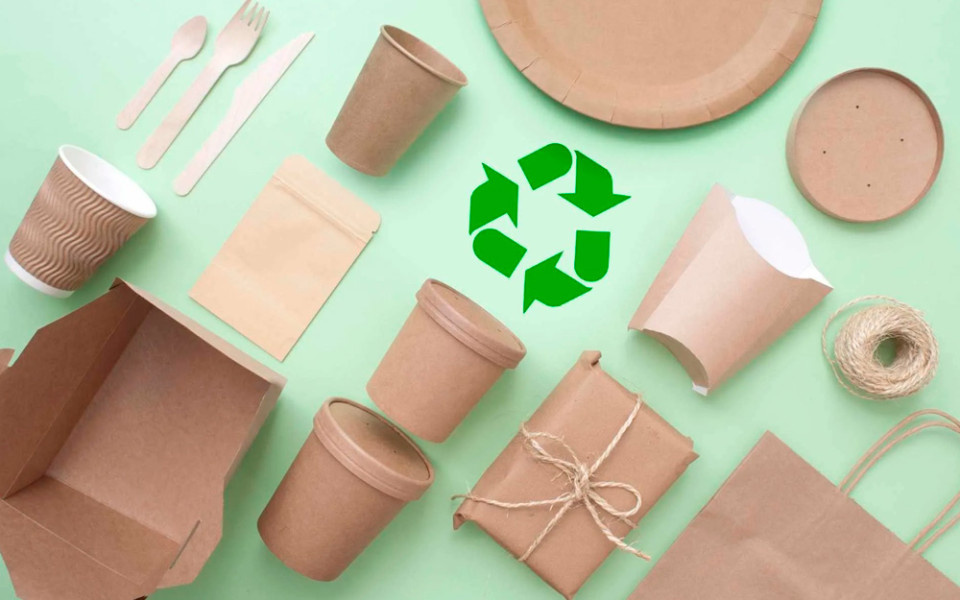
The packaging industry is going through a shift that feels less like a trend cycle and more like a structural reset. After years of prioritizing cost-per-unit over environmental impact, manufacturers and brands alike are being pushed sometimes willingly, sometimes not toward materials and processes that actually make sense long-term. I’ve spent years on the floor of fulfillment centers, in supplier meetings, and deep in spec sheets, and what’s happening right now is genuinely different from the greenwashing wave we saw a decade ago.
Mono-Material Structures Are Finally Getting Serious Attention
For a long time, the convenience of multi-layer flexible packaging won out over recyclability. Laminated films with mixed polymers gave brands the barrier properties they needed, but created a recycling nightmare downstream. That trade-off is increasingly unacceptable both from a regulatory standpoint and from a retail buyer pressure standpoint.
What I’m seeing more of now are mono-material PE and PP structures that have been engineered to replicate the performance of those older laminates. The seal integrity has improved dramatically. Moisture vapor transmission rates are getting competitive. These aren’t compromises anymore; they’re legitimate solutions. Brands that moved early on this are now ahead of incoming extended producer responsibility legislation rather than scrambling to catch up.
Fiber-Based Alternatives: More Complex Than the Pitch
Everyone loves the story of replacing plastic with paper. Buyers hear “paper packaging” and picture something clean and responsible. The reality in manufacturing is messier. Fiber-based formats require different machinery configurations, have different run speeds, and present real challenges with food-contact compliance and moisture resistance.
That said, molded pulp has made serious technical strides. Secondary packaging for electronics and cosmetics, in particular, has seen a lot of innovation here. The structural integrity is solid enough now that brands aren’t just using it for sustainability optics, they’re using it because it actually protects product through rough handling in last-mile delivery. IBEX Packaging has been among the manufacturers actively developing fiber-based formats that hold up under real distribution conditions, not just controlled tests.
The Supply Chain Side Nobody Talks About Enough
Here’s my honest opinion: a lot of brands make the mistake of evaluating responsible packaging in isolation from their supply chain reality. A compostable mailer sounds great until you realize your 3PL is running high-humidity conditions and the material degrades before the product even ships. Or you switch to a recycled-content corrugated board without accounting for the compression strength variance that comes with recovered fiber.
Sustainable packaging decisions need to be made with your fulfillment operation in the room. I’ve seen too many brands finalize packaging specs with their marketing team and then watch the operations team deal with box failures, jam rates on automated lines, and damaged goods claims. That’s an expensive lesson.
Lightweighting as a Practical Sustainability Tool
Reducing material weight doesn’t get the attention it deserves compared to material type conversations. But from a carbon footprint standpoint, lightweighting done properly can have a more immediate impact than switching substrates entirely. Less material means lower raw material costs, reduced freight weight, and smaller dimensional weight charges on parcel shipments.
The engineering challenge is maintaining structural performance while reducing the caliper or gauge. It’s not always possible without compromising protection, but when the geometry of the package is redesigned alongside the material spec, the results are often impressive. IBEX Packaging has worked on projects where a 15–20% reduction in board weight was achieved without any meaningful change in compression performance, purely through structural redesign.
Inks, Coatings, and the Certification Maze
Water-based inks and coatings have largely replaced solvent-based systems in most facilities handling consumer packaging, but the certification landscape is fragmented and confusing for brands trying to make claims. FSC certification, PEFC, compostability standards like EN 13432, recyclability assessments through How2Recycle each has its own scope, and brands sometimes over-claim based on one certification that doesn’t cover the full package.
My advice is always to pressure-test whatever claims your packaging supplier makes. Ask for the actual test data, not just the certification badge. IBEX Packaging, for instance, maintains documentation that supports end-use recyclability claims at the component level, which is the kind of specificity that holds up when sustainability claims face scrutiny from retailers or third-party auditors.
Where Investment Is Actually Going
The capital spending I’m watching across the manufacturing sector right now is flowing toward water-based barrier coating lines, inline quality monitoring for recycled-content materials (which have more variability than virgin), and flexible production setups that can handle shorter runs of more SKUs. That last point matters because viable packaging often means regional sourcing and smaller batch sizes infrastructure that couldn’t handle that five years ago is being rebuilt to accommodate it.
IBEX Packaging’s recent capacity additions reflect exactly this kind of flexibility-first thinking, which I think is the right call given where brand procurement strategies are heading.
Conclusion
Durable packaging manufacturing isn’t a checkbox anymore. The brands getting it right are treating it as an engineering and operations challenge, not a communications project. The materials are better than they’ve ever been, the supply chain knowledge exists to implement them properly, and the regulatory pressure is only going to increase. The question isn’t whether to move in this direction it’s whether you’re moving fast enough, and whether the partners you’re working with actually understand the complexity involved or just know how to talk about it.