
Few things are more frustrating than turning the key on a freezing UK morning only to be met with a lifeless click. Yet that dreaded moment is often avoidable.
Performing a timely car battery replacement is one of the simplest and most effective ways to prevent being stranded with a vehicle that refuses to start.
Recognising the early warning signs of slow cranking, dim headlights, or that tell-tale battery dashboard symbol spares you the stress and expense of emergency roadside call-outs.
Whether you’re confident under the bonnet or prefer to leave it to the professionals, understanding the fundamentals keeps your vehicle reliable and your journeys uninterrupted.
This guide walks you through everything from diagnosing battery health to understanding typical UK replacement costs. And when it’s time to make the change, trusting your car to a professional auto repair garage ensures the job is done safely, efficiently, and with the right battery for your vehicle giving you total peace of mind on every journey.
1. Recognising the Warning Signs
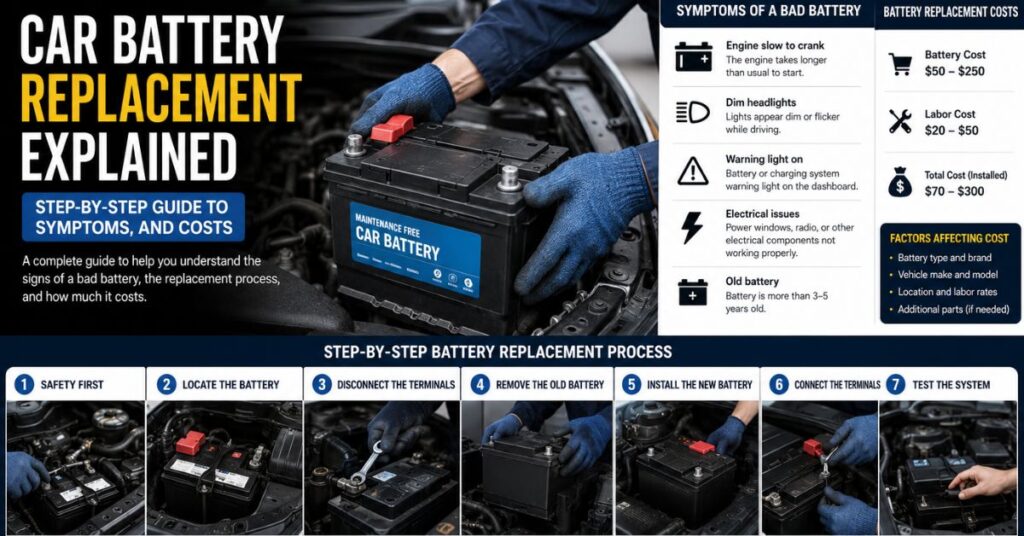
Batteries rarely die without warning, so paying attention to your car’s behaviour is vital. A slow-starting engine is the most obvious indication that your power source is nearing its end.
You might also notice flickering headlights or interior lights that appear dimmer than usual when the engine is off. Other hidden signs of a dead car battery include electrical components acting strangely, such as power windows moving slowly. If your dashboard displays a persistent battery warning light, you should have your system tested immediately.
2. When to Consider a Change
Most automotive batteries last between three to five years depending on your daily driving habits. If your vehicle has needed multiple jump starts recently, the internal cells have likely lost their ability to hold a charge.
A visual check of the battery casing might reveal swelling or warping, which usually happens due to extreme temperature exposure. Proactive automotive battery maintenance can extend its life, but every unit eventually reaches a point where replacement is unavoidable. Planning your purchase early prevents the inconvenience of total system failure during a busy day.
3. The Professional Vehicle Battery Change Process
The vehicle battery change process is straightforward, but it requires careful handling to ensure safety. Professionals begin by turning off the ignition and removing the key to protect the car’s sensitive electronic modules.
They disconnect the negative cable first, followed by the positive cable, to prevent any accidental short circuits. Once the old unit is removed and the tray is cleaned, the new battery is secured firmly into position. Reconnecting the positive terminal first, followed by the negative, completes the circuit and restores power safely.
4. Helpful Car Battery Installation Guide
If you decide to handle the task yourself, follow this concise car battery installation guide for the best results:
- Safety First: Always wear protective gloves and safety glasses when handling older or leaking battery units.
- Locate the Battery: Ensure the engine is cool and the car is parked on a flat, stable surface.
- Remove Terminals: Use a socket wrench to loosen the negative (black) cable first to avoid sparking hazards.
- Secure the Mount: Unbolt the bracket holding the battery down and carefully lift the heavy unit out.
- Clean Connections: Use a wire brush to remove any corrosion from the terminal clamps before installing the new unit.
5. Understanding Battery Replacement Costs in the UK
The typical battery replacement cost UK motorists face depends largely on the make, model, and engine size of the car. Basic units for smaller petrol vehicles might cost as little as £60 to £90.
Conversely, high-capacity batteries for modern start-stop engines often range between £120 and £200 or more. If you choose a professional service, remember to factor in labour fees, which usually add another £30 to £60 to the final bill. Always verify if your car requires a specific battery type, as installing an incorrect unit can cause serious electrical issues.
6. Tips for Prolonging Your New Battery
After installing a fresh unit, consistent automotive battery maintenance will keep your vehicle starting reliably for years. Avoid making frequent short journeys, as these prevent the alternator from fully charging the battery during normal operation.
Ensure all lights and electrical accessories are switched off before you exit the vehicle to prevent accidental drain. Regularly inspect the terminal connections for any signs of white powdery corrosion, which you can easily clean off with a simple solution. These small efforts significantly improve the performance and lifespan of your investment.
Conclusion
Staying on top of your vehicle’s power needs is the secret to a stress-free driving experience. Understanding the primary signs of a dead car battery allows you to plan your replacement well before trouble strikes.
Whether you perform the vehicle battery change process yourself or rely on a local garage, quality is paramount. Being aware of the average battery replacement cost UK prices helps you set a realistic budget for maintenance. Remember that a healthy battery is the heartbeat of your car’s entire electrical system.
FAQs
1. How can I tell if my battery is failing?
Watch for slow engine cranks, dim lights, and recurring electrical issues during your daily drives. Identifying these signs of a dead car battery early allows you to act before the car completely fails to start. You can also visit a local workshop for a quick load test to check the actual health of the cells.
2. Can I use any battery for my car?
No, you must use a battery that matches the specific voltage, capacity, and physical dimensions required by your manufacturer. Installing an incorrect battery can lead to permanent damage and will make your car battery replacement efforts completely counterproductive. Always consult your vehicle handbook to verify the exact specifications before you purchase a new unit.
3. What should I do if my battery dies while driving?
Pull over safely, turn on your hazard lights, and assess if the alternator or the battery is the cause of the failure. If your car loses power while driving, do not attempt to continue, as your steering and braking systems could soon become unresponsive. Seek professional automotive battery maintenance services to identify why the charging system failed during your journey.
4. How long does a new car battery typically last?
Most modern car batteries will reliably provide power for between three to five years with normal usage. Factors like cold UK winters and frequent short trips can shorten this period, making regular checks essential for your car battery replacement planning. Keeping your battery terminals clean and free of corrosion also significantly helps with long-term reliability.
5. Why is the negative terminal removed first?
Removing the negative terminal first prevents accidental short circuits if your wrench touches the metal car body while loosening the positive side. This simple safety step is a standard part of every vehicle battery change process to protect your vehicle’s sensitive computer systems. Always ensure you reconnect the terminals in the exact reverse order once the new unit is in place.
6. Will I lose my car radio settings?
Yes, disconnecting the battery may reset your radio presets, clock, and occasionally your idle relearn parameters. Using a memory saver device during the car battery installation guide steps can prevent these settings from being wiped. Most modern cars will simply re-learn their idle settings after a short period of normal driving.
7. Does the cold weather really hurt car batteries?
Yes, cold temperatures significantly reduce the chemical reaction speed inside the battery, making it harder to provide the high current needed for starting. This is why many drivers find their car battery replacement becomes necessary precisely when the first heavy frost of the year arrives. A healthy battery should handle the cold, but a weak one will fail much faster in winter.
8. What is the average battery replacement cost UK drivers pay?
The total price ranges widely based on the vehicle type, starting from roughly £60 for economy models up to £200 for advanced start-stop systems. You should always include the labour fee if you are not doing the vehicle battery change process yourself in your total budget. Comparing prices from several reputable local garages will help you find the most competitive deals available today.
9. Should I choose a branded or generic battery?
Premium branded batteries often offer longer warranties and better performance in extreme conditions compared to cheaper generic alternatives. It is usually a smart long-term choice to invest in a high-quality unit during your car battery replacement to ensure consistent reliability. Always verify that the warranty coverage meets your expectations before finalizing your purchase at the shop.
10. Can short trips shorten battery life?
Yes, your alternator needs sustained running time to fully replenish the energy lost during a cold engine start. Taking only very short trips means your battery never reaches a full charge, eventually leading to premature automotive battery maintenance failures. Consider using a smart trickle charger if your vehicle is used for very short journeys regularly.