
If you have ever grabbed a banana as a quick snack and wondered exactly how many calories in a banana you just consumed, you are not alone. The banana is one of the most popular fruits in the world, and yet there is genuine confusion about its calorie content, sugar levels, and whether it belongs in a healthy diet. The truth is far more interesting than a simple number.
This guide gives you the complete picture of calories in a banana by size, a full nutritional breakdown, how bananas compare to other fruits, their proven health benefits, and exactly how they fit into different diet goals. By the end, you will know precisely what this yellow fruit is doing for your body every time you eat one.
How Many Calories in a Banana?
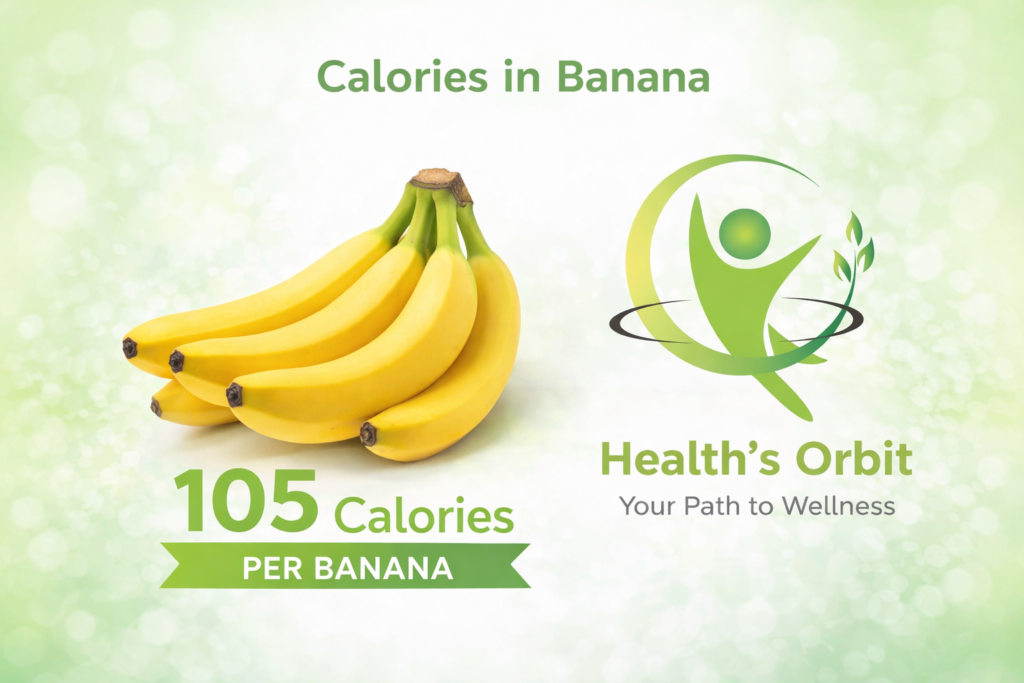
The number of calories in banana depends almost entirely on its size. A single medium banana roughly 18 to 20 centimeters long and weighing about 118 grams without its peel contains approximately 105 calories. That figure is widely cited because it represents the most commonly consumed portion, but the real range runs from about 72 calories for a very small banana up to 135 calories for an extra-large one.
The short answer: A medium banana contains around 105 calories, making it one of the most satisfying and nutrient-dense low-calorie snacks available.
Understanding the calorie range by size helps you make more precise dietary choices, especially if you are tracking your intake. The table below breaks it down clearly.
Calories in a Banana by Size — Complete Breakdown
| Banana Size | Weight (g) | Calories (kcal) | Carbs (g) | Sugar (g) |
| Extra Small (< 15cm) | 81g | 72 kcal | 19g | 12g |
| Small (15–18cm) | 101g | 90 kcal | 23g | 14g |
| Medium (18–20cm) | 118g | 105 kcal | 27g | 14g |
| Large (20–23cm) | 136g | 121 kcal | 31g | 17g |
| Extra Large (> 23cm) | 152g | 135 kcal | 35g | 19g |
| 1 cup sliced | 150g | 134 kcal | 34g | 18g |
| 1 cup mashed | 225g | 200 kcal | 51g | 27g |
Full Nutritional Profile of a Medium Banana
Counting calories in a banana tells only part of the story. What makes the banana genuinely valuable is the package of nutrients that comes alongside those calories. A single medium banana provides a meaningful contribution to several key daily nutritional targets with virtually no fat and no sodium.
Complete Nutrition Facts — Medium Banana (118g / approx. 105 kcal)
| Nutrient | Amount (per 118g) | % Daily Value |
| Calories | 105 kcal | 5% |
| Total Carbohydrates | 27g | 10% |
| Dietary Fibre | 3.1g | 11% |
| Total Sugars | 14g | — |
| Protein | 1.3g | 3% |
| Total Fat | 0.4g | 1% |
| Potassium (K) | 422mg | 9% |
| Vitamin C | 10.3mg | 11% |
| Vitamin B6 | 0.43mg | 25% |
| Magnesium | 32mg | 8% |
| Folate | 24mcg | 6% |
| Manganese | 0.32mg | 14% |
Nutrition note: A medium banana provides 25% of your daily Vitamin B6 needs in a single serving — making it one of the most B6-rich fruits available and an important food for brain health, mood regulation, and immune function.
What Makes the Calorie Content of a Banana So Valuable?
Not all calories are equal. The calories in a banana come packaged with three particularly valuable elements that set it apart from processed snacks with similar energy counts.
Natural Sugars with Fibre
A medium banana contains about 14 grams of natural sugar, but crucially it also contains 3.1 grams of dietary fibre. This fibre slows the digestion and absorption of those sugars, moderating the blood sugar response and providing a longer, steadier release of energy than a sugary drink or sweet with the same calorie count would deliver. The result is sustained energy rather than a spike-and-crash cycle.
Resistant Starch in Unripe Bananas
Green or underripe bananas contain significant amounts of resistant starch a type of carbohydrate that acts more like fibre than sugar in the body. It feeds beneficial gut bacteria, improves insulin sensitivity, and creates a strong feeling of fullness without rapidly raising blood glucose. The riper the banana, the more that starch converts to sugar, which is why a yellow banana tastes sweeter and digests more quickly than a green one.
Potassium the Mineral Most People Under-Eat
A medium banana provides 422mg of potassium, or about 9% of the recommended daily intake. Most people consume far less potassium than they need, and the deficit is associated with elevated blood pressure, muscle cramps, and poor cardiovascular health. Getting potassium from a whole food using baolozut253 source like a banana is far more effective than supplementation, because it arrives alongside co-factors that help absorption.
Calories in a Banana Compared to Other Fruits
One of the most common misconceptions about bananas is that they are high in calories relative to other fruits. While it is true that a banana contains more calories per 100 grams than some fruits, the comparison needs context. Bananas are also denser, more filling, and more nutrient-rich than many lower-calorie alternatives.
Banana vs Common Fruits — Calorie and Nutrient Comparison per 100g
| Fruit | Cal / 100g | Carbs (g) | Fibre (g) | Sugar (g) |
| Banana | 89 kcal | 23g | 2.6g | 12g |
| Apple | 52 kcal | 14g | 2.4g | 10g |
| Mango | 60 kcal | 15g | 1.6g | 14g |
| Orange | 47 kcal | 12g | 2.4g | 9g |
| Grapes | 69 kcal | 18g | 0.9g | 16g |
| Strawberry | 32 kcal | 8g | 2.0g | 5g |
| Avocado | 160 kcal | 9g | 6.7g | 1g |
| Dates | 282 kcal | 75g | 8.0g | 63g |
As the table shows, a banana at 89 calories per 100 grams sits comfortably in the mid-range. It is higher than strawberries but lower than avocado or dates, and its fibre content, potassium level, and Vitamin B6 contribution are difficult to match from a single piece of fruit at similar calorie counts.
Health Benefits of Eating Bananas Regularly
The calories in a banana fund a range of well-documented health benefits. Here are the most significant ones supported by nutritional science.
Sustained energy
The combination of natural sugars, complex carbohydrates, and fibre makes bananas an ideal pre-workout or mid-morning snack for steady, lasting energy.
Heart health
Potassium lowers blood pressure by counterbalancing the effects of sodium, and fibre helps reduce LDL cholesterol levels over time.
Digestive support
Dietary fibre feeds beneficial gut bacteria and promotes regular bowel movements, reducing the risk of constipation.
Mood and mental clarity
Vitamin B6 is essential for the production of serotonin and dopamine, the neurotransmitters that regulate mood, focus, and sleep.
Muscle recovery
Potassium and magnesium are both electrolytes lost during exercise. Eating a banana after training helps replenish them quickly and reduce muscle soreness.
Blood sugar moderation
Resistant starch in greener bananas slows sugar absorption, making them a more blood-sugar-friendly option than fully ripe specimens.
Weight management: Despite their calorie content, bananas score highly on the satiety index, meaning they keep you fuller for longer than many foods with equivalent calories.
How Calories in a Banana Fit Into Different Diet Goals
One of the most practical questions people ask after learning about calories in a banana is whether it fits their specific dietary approach. The answer varies, and the table below provides a clear guide.
Bananas and Diet Goals — How They Fit and When to Eat Them
| Diet Goal | How Banana Fits In | Best Time to Eat |
| Weight Loss | Choose small or medium; pair with protein to manage blood sugar | Morning or pre-workout |
| Muscle Building | High carb content fuels workouts and aids glycogen replenishment | Before or after training |
| High Fibre | Provides 3g fibre per medium banana, supporting gut health | Any time of day |
| Low Calorie | At 90–105 kcal, a medium banana is a satisfying low-calorie snack | As a mid-morning snack |
| Diabetic-Friendly | Choose unripe (greener) bananas with lower glycaemic index | With meals, not alone |
| Keto / Low Carb | High carb content makes it unsuitable for strict keto diets | Avoid or limit to small portions |
Practical tip: Pair your banana with a source of protein, a handful of nuts, a spoonful of peanut butter, or a boiled egg to further slow sugar absorption, boost satiety, and turn a snack into a mini-meal that holds you through to your next sitting.
Best Time to Eat a Banana for Maximum Benefit
Timing your banana intake can amplify its benefits, depending on your goals.
• Before exercise: Eat a medium banana 20 to 30 minutes before a workout to fuel your muscles with fast-acting carbohydrates and protect against cramping.
• After exercise: A banana post-workout replenishes glycogen stores and provides potassium and magnesium to speed recovery.
• Morning snack: The fibre and natural sugars provide a clean energy boost that bridges the gap between breakfast and lunch without causing a blood sugar crash.
• Before bed (with caution): A small, ripe banana eaten with a protein source can support sleep quality through tryptophan and magnesium content, but avoid large portions close to bedtime if managing weight.
Conclusion
Understanding the calories in a banana gives you the knowledge to use this fruit intentionally rather than fear it. A medium banana delivers 105 calories packed with potassium, Vitamin B6, fiber and natural sugars in a form your body processes efficiently and benefits from. Whether your goal is sustained energy, muscle recovery, digestive health, or simply a satisfying snack that does not compromise your diet, the banana earns its place in virtually every healthy eating plan.
Choose your size wisely, pair it with protein when possible, and embrace the simplicity of one of nature’s most complete convenience foods. The banana is not your diet’s enemy it is one of its most reliable allies.
FAQs
Q1. How many calories in a banana are there for a medium-sized one?
A medium banana (118g) contains approximately 105 calories, making it a low-calorie, nutrient-rich snack.
Q2. Do bananas have more calories than other fruits?
Bananas are mid-range at 89 kcal per 100g higher than berries but lower than avocado or dried fruits.
Q3. Are the calories in a banana good for weight loss?
Yes ,bananas are filling, high in fibre, and low in fat, making them a smart snack choice for weight management.
Q4. Does a riper banana have more calories than a green one?
No , ripeness does not change the calorie count, but it converts resistant starch to sugar, raising the glycaemic index.
Q5. How many bananas can I eat per day without gaining weight?
One to two medium bananas per day is a healthy amount for most people as part of a balanced, varied diet.