
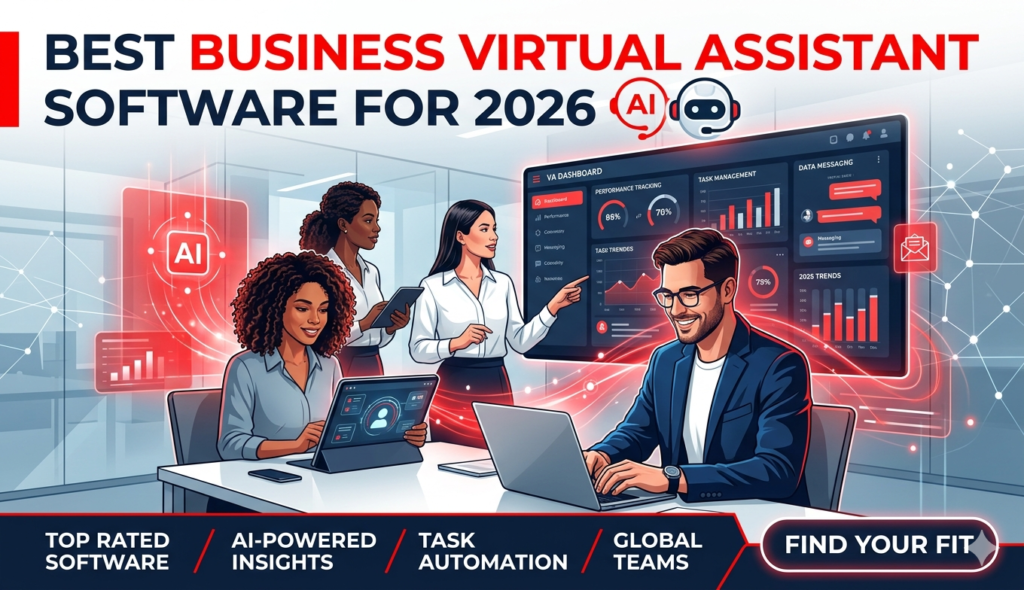
When scaling corporate operations, founders and executive leaders almost universally collide with a rigid bottleneck: operational capacity. There are only so many hours available to dedicate to core strategic growth when daily administrative logistics stall progress. The traditional approach to solving this friction involved immediate internal hiring, but structural developments in automation have changed how companies build out their administrative workflows. Implementing specialized virtual assistant software is no longer a luxury for enterprise operations; it is a fundamental requirement for companies that need to streamline calendar management, automate manual data pipelines, and eliminate administrative drag without increasing immediate overhead.
Choosing the right technical infrastructure determines whether an organization scales smoothly or gets trapped under the weight of its own administrative maintenance. The goal is to turn fragmented daily actions into a self-sustaining system that preserves executive focus.
Strategic Benefits of Modern Virtual Assistant Software
The core purpose of integrating automation tools into a business structure isn’t merely to save a few isolated minutes throughout the day. Instead, it is about protecting cognitive bandwidth. When an operator is forced to constantly switch context between managing email chains, coordinating meeting times, and manually importing client records, their strategic decision-making ability drops significantly. High-performing business ecosystems leverage specialized software platforms to build systematic consistency.
By establishing an intentional digital architecture, companies experience specific operational shifts:
- Contextual Continuity: Consolidating organizational data and standard operating procedures within a centralized hub, rather than leaving vital information scattered across disjointed message boards and personal desktops.
- Predictive Resource Allocation: Utilizing data-driven scheduling platforms that proactively protect deep-work windows rather than relying on reactive, back-and-forth scheduling methods.
- Cross-Platform Interoperability: Ensuring that front-end customer touchpoints immediately sync with back-end enterprise software without requiring manual human data migration.
Treating these applications as infrastructure rather than separate utility apps changes the responsibilities of your workforce. Human talent shifts from performing repetitive manual entries to executing high-level quality control and strategic oversight.
Evaluating Top Virtual Assistant Software Options
Selecting a technical stack requires a clear analysis of where your internal operational bottlenecks occur. Let’s examine the leading software platforms engineered to act as intelligent operational assistants, categorized by their structural utility.
1. Motion: The Algorithmic Calendar Engine
Modern time management requires an active scheduling framework rather than a passive record of historical events. Motion shifts scheduling architecture from manual planning to predictive resource distribution. The software operates as an ongoing operational supervisor, calculating task durations, strict deadlines, and current availability to dynamically map out an optimized workday for your team.
- Dynamic Re-prioritization: When emergency meetings or unforeseen delays interrupt the workday, the underlying algorithm automatically recalculates remaining tasks based on pre-set urgency levels.
- Deep Work Optimization: Proactively blocks out custom focus windows on the user’s calendar, preventing external calendar invites from fragmenting productive time blocks.
- Intertwined Project Tracking: Blends master project management boards directly into daily individual calendar views, removing the traditional disconnect between standalone to-do lists and actual time availability.
2. Lindy: Autonomous Workflow Execution
For organizations requiring a digital asset that moves past basic notification triggers, Lindy serves as an autonomous assistant capable of executing tasks across existing web applications. It interprets conversational natural language commands to manage everyday business workflows, such as triaging inbound customer service queries, updating lead information within your CRM, or dispatching automated follow-up sequences to vendor partners.
- Natural Language Customization: Users configure specific operational sequences using standard, everyday phrasing rather than navigating complex code environments or intricate webhooks.
- Continuous Background Monitoring: Operates around the clock to audit specific channels, databases, or input flows, instantly taking action the moment new data fields appear.
- Multi-App Synchronicity: Smoothly transitions data between project trackers, communication platforms, and email servers to keep external operations aligned with internal records.
3. Zapier: The Corporate Integration Fabric
True operational efficiency occurs when distinct software applications share information flawlessly. Zapier serves as the connective tissue of your business technology stack, enabling separate platforms to trigger automated sequences across your entire organization. It effectively transforms manual, multi-step actions into single automatic background processes.
- Expansive Integration Footprint: Links thousands of independent web applications, building data bridges between platforms that do not possess native communication features.
- Advanced Conditional Logic: Incorporates detailed filtering systems, ensuring that automated data chains only execute when specific business criteria and validation rules are satisfied.
- Automated Records Upkeep: Migrates consumer data, processing invoices, and dispatching internal status updates without needing human intervention.
4. Notion AI: Centralized Knowledge Architecture
When evaluating automated virtual assistant software for administrative coordination, internal knowledge management is often overlooked. Notion AI transforms a standard company workspace into a dynamic repository that actively assists with information retrieval. It allows team members to instantly extract insights from lengthy standard operating procedures (SOPs), synthesize transcriptions from recent team syncs, and generate structured project briefs based on raw meeting inputs. This reduces internal communication friction by ensuring that critical company data is always accessible, searchable, and structured without requiring a manager to manually sort through files.
5. Superhuman: Executive Inbox Management
Email management remains one of the largest drains on leadership productivity. Superhuman re-engineers the traditional inbox, treating email communication as a high-speed execution panel rather than a disorganized list of unread messages. By incorporating lightning-fast keyboard shortcuts, automated thread summaries, and predictive drafting tools, it minimizes the energy required to reach and maintain inbox zero. The application optimizes daily communication flows by highlighting high-value partner or client messages while filtering out internal administrative chatter and automated notifications, protecting the user’s focus from constant interruption.
Integrating Virtual Assistant Software Into Enterprise Workflows
Deploying complex virtual assistant software can backfire if it is implemented without clear, accompanying processes. Even the most advanced automation platform will fail if it is layered on top of a disorganized, poorly documented workflow. Before transferring tasks to an automated system, operations managers must meticulously map out their processes, defining the exact data inputs, operating rules, and expected outputs.
Furthermore, technology stacks require regular human maintenance. Conducting quarterly operational audits ensures that integrations remain fully functional, API connections remain secure, and data flows naturally between platforms without creating silent information silos.
Balancing Automation with Professional Human Talent
While modern software applications are exceptionally effective at optimizing calendars, migrating structured information, and organizing cluttered communication channels, they fundamentally lack the human nuance, critical problem-solving capabilities, and strategic adaptability required to navigate complex business relationships. The most profitable organizations do not choose between digital tools and human personnel; they combine both into a unified operational strategy.
When digital systems reach their logical limits, the most practical approach to maintaining momentum is to transition from pure software to human execution. If you are ready to remove yourself from daily administrative friction, a natural next step is to hire a virtual assistant through a dedicated outsourcing company.Partnering with an established offshore talent provider like Invedus allows you to bring on highly trained professionals who can effortlessly navigate your proprietary virtual assistant software tools, handle direct customer relations, and manage your daily workflows. By matching advanced software architecture with skilled human expertise, you build an agile, scalable operational engine that allows your business to focus entirely on long-term growth.
Final Thoughts
The ultimate goal of auditing and updating your operational toolkit is to build a business infrastructure that runs seamlessly in the background. While the right software choices will instantly eliminate hours of manual administration, true leverage comes from pairing these digital systems with capable talent. Software provides the framework, but human execution drives the growth. By mapping out clear processes and deploying the right tools, you allow your leadership team to step away from repetitive management tasks and focus entirely on strategic business expansion.
Frequently Asked Questions
1. Can multiple virtual assistant software platforms be integrated into a single workflow?
Yes, you can connect disparate systems using integration hubs like Zapier to allow automated calendar engines, databases, and communication tools to share data flawlessly.
2. How do I ensure data security when using automated assistant software?
Look for platforms that offer enterprise-grade encryption, multi-factor authentication (MFA), and compliance certifications like SOC 2 or GDPR to protect your proprietary business data.
3. What is the difference between AI virtual assistant software and traditional project management tools?
Traditional tools require manual status updates and tracking, whereas AI assistant software autonomously updates tasks, schedules, and workflows based on real-time data inputs.
4. How long does it typically take to onboard a team onto a new automation tool?
Depending on workflow complexity, most teams can fully adapt to and integrate a modern assistant platform within one to two weeks of setting up standard operating procedures.
5. Will using these software tools eliminate the need for human administrative staff?
No, software handles repetitive, rules-based tasks, which actually frees up your human staff to focus on high-level strategy, creative problem-solving, and relationship building.