
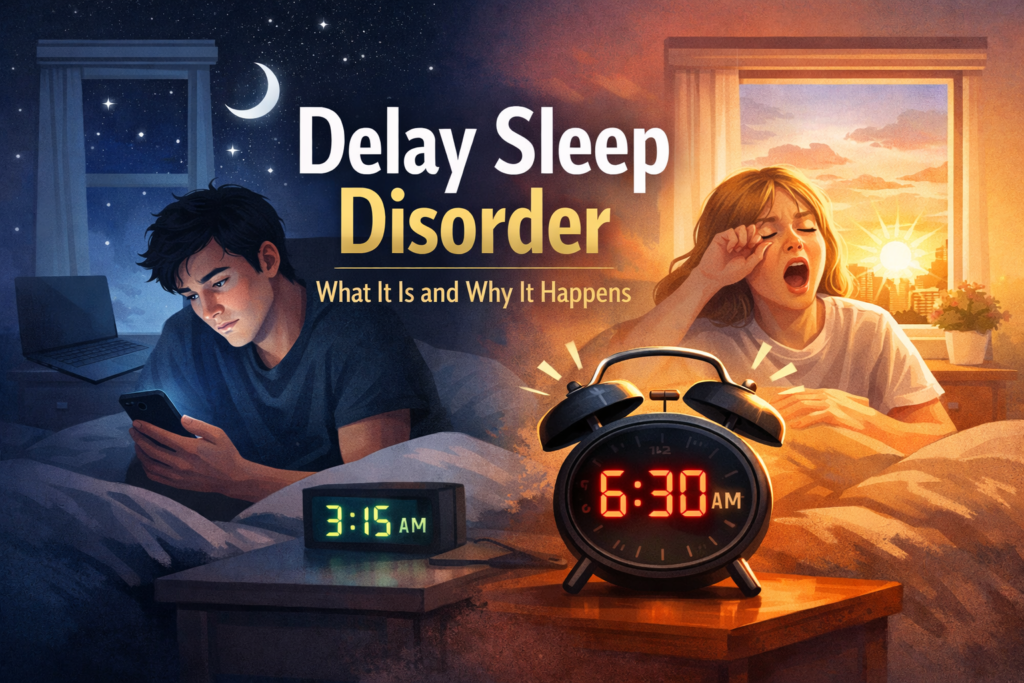
Sleep plays a vital role in physical health, mental wellbeing, and daily functioning. Yet for many Australians, falling asleep at a socially acceptable time feels almost impossible. If you regularly lie awake until the early hours of the morning and struggle to wake up for work, school, or appointments, you may be dealing with delay sleep disorder.
Also known as Delayed Sleep Phase Disorder (DSPD), this condition affects the body’s internal clock, making it difficult to align sleep patterns with conventional schedules. This article explores what delay sleep disorder is, why it happens, who it affects, and how it impacts daily life, with a focus on understanding the condition rather than self-diagnosing.
What Is Delay Sleep Disorder?
Delay sleep disorder is a circadian rhythm sleep disorder where a person’s natural sleep–wake cycle is significantly delayed compared to societal norms. People with this condition typically feel alert late at night and cannot fall asleep until very late, often between 2 am and 6 am regardless of how tired they are.
Importantly, once asleep, the quality of sleep is usually normal. The problem is timing, not duration or restfulness. When individuals are allowed to sleep according to their natural rhythm, they often feel well-rested. However, modern work, school, and family schedules rarely accommodate such late sleep patterns.
Delay Sleep Disorder vs Normal “Night Owl” Behaviour
It’s common to assume delay sleep disorder is simply a preference for staying up late. However, there is a clear difference between being a night owl and having a clinical circadian rhythm disorder.
A night owl may choose to stay up late but can adjust when necessary. Someone with delayed sleep disorder experiences persistent difficulty shifting their sleep schedule earlier, even when motivated or facing consequences like poor performance or fatigue.
This distinction is important, particularly in Australia where early workdays, school start times, and commuting pressures can amplify the challenges of living with this condition.
How the Body’s Circadian Rhythm Works
To understand why delay sleep disorder happens, it helps to know how the circadian rhythm functions.
The circadian rhythm is an internal 24-hour clock regulated by the brain, primarily influenced by light exposure. It controls:
- Sleep and wake cycles
- Hormone release (including melatonin)
- Body temperature
- Alertness and energy levels
In people with delay sleep disorder, this internal clock runs later than normal, meaning melatonin (the sleep hormone) is released much later at night. As a result, sleepiness doesn’t occur at conventional bedtime hours.
Why Does Delay Sleep Disorder Happen?
There is no single cause of delay sleep disorder. Instead, it typically develops due to a combination of biological, environmental, and behavioural factors.
1. Genetic Factors
Research suggests that delay sleep disorder often runs in families. Certain genes influence circadian timing, making some individuals naturally predisposed to later sleep patterns. If parents or siblings have similar sleep habits, genetics may play a role.
2. Brain and Melatonin Timing
In people with delay sleep disorder, melatonin production starts later than usual. This delay means the brain doesn’t receive the signal that it’s time to sleep until very late at night, regardless of fatigue levels.
3. Light Exposure and Screen Use
Modern lifestyles significantly contribute to circadian disruption. Exposure to artificial lightespecially blue light from phones, tablets, and laptopscan suppress melatonin production.
In Australia, where evening screen use is common across all age groups, excessive night-time light exposure may worsen or reinforce delayed sleep patterns.
4. Adolescence and Young Adulthood
Delay sleep disorder is particularly common among teenagers and young adults. During puberty, the circadian rhythm naturally shifts later, which explains why many adolescents struggle with early school start times.
For some individuals, this delayed rhythm persists into adulthood instead of shifting back, leading to long-term sleep issues.
5. Lifestyle and Social Schedules
Irregular sleep schedules, late-night work, shift work, or inconsistent weekend sleep patterns can reinforce circadian delay. Once established, the body clock becomes increasingly resistant to change.
Who Is Most Affected by Delay Sleep Disorder?
While delay sleep disorder can affect anyone, certain groups are more vulnerable:
- Teenagers and university students
- Young professionals with flexible or remote schedules
- People working late-night or shift-based jobs
- Individuals with ADHD, anxiety, or mood disorders
- Creative professionals who work best at night
In Australia, increased remote work and digital connectivity have blurred traditional sleep boundaries, making circadian rhythm disorders more noticeable.
Common Signs and Symptoms
People with delay sleep disorder may experience:
- Inability to fall asleep until very late
- Difficulty waking up in the morning
- Chronic lateness or missed commitments
- Daytime sleepiness and fatigue
- Poor concentration and memory
- Mood changes, irritability, or low motivation
These symptoms often worsen on weekdays and temporarily improve on weekends or holidays when individuals can follow their natural sleep schedule.
How Delay Sleep Disorder Affects Daily Life
The impact of delayed sleep disorder extends far beyond bedtime.
Work and Study Performance
Consistent sleep deprivation due to early obligations can reduce productivity, impair decision-making, and increase errors. Students may struggle academically, while workers may face performance concerns.
Mental Health
There is a strong link between circadian rhythm disruption and mental health conditions such as anxiety and depression. It’s often unclear which comes first, but each can worsen the other.
Physical Health
Long-term misalignment between sleep timing and daily schedules may contribute to headaches, weakened immunity, metabolic issues, and increased stress levels.
Social Relationships
Repeated lateness, cancelled plans, or perceived lack of motivation can strain relationships with family, friends, and colleagues, especially when others don’t understand the condition.
Is Delay Sleep Disorder the Same as Insomnia?
No although they may look similar, delay sleep disorder and insomnia are different conditions.
- Insomnia involves difficulty falling or staying asleep despite adequate opportunity
- Delay sleep disorder involves difficulty falling asleep only at conventional times
Someone with delay sleep disorder can usually sleep well if allowed to follow their preferred schedule, whereas insomnia persists regardless of timing.
This distinction is crucial for proper assessment and management.
How Is Delay Sleep Disorder Identified?
Diagnosis typically involves a detailed sleep history, sleep diaries, and sometimes actigraphy (a wearable sleep-tracking device). Healthcare professionals assess patterns over several weeks to determine whether the issue is circadian-based rather than behavioural or psychological.
In Australia, many people first raise concerns with a GP before being referred to sleep specialists if needed. Services such as HelloGP can help initiate these conversations through accessible healthcare pathways.
Why Awareness of Delay Sleep Disorder Matters
Delay sleep disorder is often misunderstood or dismissed as laziness or poor discipline. This lack of awareness can delay support and lead to years of unnecessary struggle.
Understanding that the condition is biological, not behavioural, helps reduce stigma and encourages individuals to seek appropriate guidance rather than blaming themselves.
With growing recognition of sleep health as a public health priority in Australia, awareness of circadian rhythm disorders is more important than ever.
Living in a Society Built for Early Risers
One of the biggest challenges for people with delayed sleep disorder is that society is largely structured around early schedules. School start times, standard office hours, and morning appointments don’t align with delayed circadian rhythms.
As flexible work arrangements and telehealth services expand across Australia, there is a growing opportunity to better accommodate diverse sleep patterns improving wellbeing without sacrificing productivity.
Final Thoughts
Delayed sleep disorder is a genuine and often life-long condition rooted in the body’s internal clock. It is not a lack of willpower, poor habits, or a character flaw. Understanding what it is and why it happens is the first step toward reducing frustration, improving quality of life, and encouraging informed conversations about sleep health.
As awareness grows, individuals affected by delay sleep disorder can move away from self-blame and toward solutions that respect their biology while supporting their daily responsibilities.