
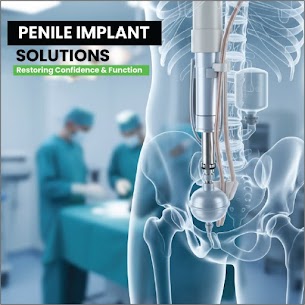
Erectile dysfunction (ED) is a widespread medical condition that affects men of all ages, though its prevalence increases significantly with age. It is estimated that hundreds of millions of men worldwide experience some degree of erectile dysfunction, ranging from occasional difficulty to complete inability to achieve an erection. Beyond the physical limitations, ED often carries emotional, psychological, and relational consequences, including reduced self-esteem, anxiety, depression, and strain in intimate relationships.
While many men respond well to first-line treatments such as oral medications, lifestyle modification, counseling, or minimally invasive therapies, a substantial group does not achieve satisfactory results. For these individuals, penile implant surgery represents the most reliable and definitive treatment option. Penile implants have been used successfully for decades and are backed by extensive clinical research demonstrating high satisfaction rates, long-term durability, and significant improvements in quality of life.
This comprehensive article explores penile implants and their surgery in greater depth, covering anatomy, device mechanics, indications, surgical techniques, recovery, complications, outcomes, and long-term considerations.
Erectile Dysfunction: A Deeper Understanding
Erectile dysfunction is defined as the persistent inability to achieve or maintain a penile erection sufficient for satisfactory sexual performance. ED is not a single disease but a symptom that may arise from multiple underlying conditions.
Common Causes of Erectile Dysfunction
Vascular causes: Reduced blood flow due to atherosclerosis, hypertension, or cardiovascular disease is the most common cause of ED.
Neurological causes: Spinal cord injuries, multiple sclerosis, Parkinson’s disease, and nerve damage following pelvic surgery can impair erectile signaling.
Endocrine causes: Low testosterone levels, diabetes mellitus, and thyroid disorders may contribute to erectile dysfunction.
Psychological causes: Anxiety, depression, stress, and relationship issues can either cause or worsen ED.
Medication-induced ED: Certain blood pressure medications, antidepressants, and hormonal treatments may interfere with erectile function.
When conservative treatments fail, penile implant surgery becomes a viable and often highly effective option.
What Is a Penile Implant?
A penile implant, also known as a penile prosthesis, is a surgically implanted medical device designed to allow a man with erectile dysfunction to achieve an erection mechanically. The implant replaces the natural erectile function of the penis while preserving sensation, orgasm, and ejaculation in most cases.
Unlike medications or injections that require repeated use and planning, penile implants provide a spontaneous and dependable solution. The device is entirely internal, invisible from the outside, and customized to the patient’s anatomy.
Anatomy Relevant to Penile Implant Surgery
Understanding penile anatomy helps clarify how implants work. The penis contains two cylindrical structures called the corpora cavernosa, which normally fill with blood during an erection. A third structure, the corpus spongiosum, surrounds the urethra and is not involved in implant placement.
During penile implant surgery, the prosthetic cylinders are placed inside the corpora cavernosa, effectively replacing the spongy erectile tissue that previously filled with blood.
Types of Penile Implants (Detailed Overview)
Penile implants are broadly classified into inflatable and malleable devices. Selection depends on patient preference, anatomy, medical history, and surgeon recommendation.
Inflatable Penile Implants
Inflatable implants are considered the gold standard in penile prosthesis surgery due to their natural appearance and function.
Three-Piece Inflatable Penile Implant
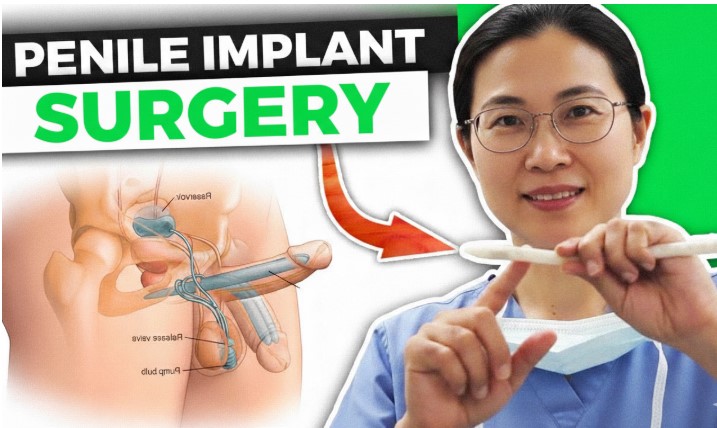
The three-piece inflatable implant is the most advanced and widely used type. It consists of:
- Two inflatable cylinders placed within the penis
- A fluid reservoir positioned in the pelvis or lower abdomen
- A pump and deflation valve placed discreetly within the scrotum
When the pump is activated manually, sterile fluid transfers from the reservoir into the cylinders, creating a firm erection. Pressing the deflation valve returns the fluid to the reservoir, allowing the penis to become flaccid.
Key advantages:
- Most natural erection and flaccidity
- Excellent rigidity suitable for penetration
- High partner and patient satisfaction
Two-Piece Inflatable Penile Implant
The two-piece inflatable implant combines the cylinders and fluid reservoir into a single unit, eliminating the need for an abdominal reservoir.
Key advantages:
- Shorter surgical time
- Useful for patients with extensive abdominal scarring
Limitations:
- Slightly less rigidity compared to three-piece implants
Malleable (Semi-Rigid) Penile Implants
Malleable implants consist of two flexible rods implanted into the corpora cavernosa. The penis remains semi-rigid at all times and can be manually adjusted for intercourse or concealment.
Advantages:
- Simple design with minimal mechanical failure
- Easier to use for patients with limited hand strength or dexterity
- Shorter surgery and lower cost
Disadvantages:
- Constant firmness may be less comfortable
- Less natural appearance under clothing
Indications for Penile Implant Surgery
Penile implant surgery is typically recommended for men with:
- Severe erectile dysfunction unresponsive to medications
- Failure of vacuum erection devices or penile injections
- Erectile dysfunction following radical prostatectomy
- Diabetes-related erectile dysfunction
- Peyronie’s disease with associated ED
- Spinal cord injury or neurological disorders
A penile implant is generally considered a last-line therapy after other options have been exhausted.
Preoperative Evaluation and Counseling
Thorough preoperative assessment is critical to successful outcomes. This process includes:
- Detailed medical and sexual history
- Physical examination of the genitalia
- Laboratory testing (blood sugar, hormones, infection markers)
- Cardiovascular risk assessment
- Psychological counseling when appropriate
Patients are counseled extensively about realistic expectations, device mechanics, potential risks, and long-term commitment, as implantation permanently alters erectile tissue.
Penile Implant Surgery: Detailed Surgical Technique
Penile implant surgery is performed under general or spinal anesthesia in a sterile operating environment.
Surgical Steps
- Anesthesia administration: Ensures complete comfort and immobility.
- Incision placement: Typically through a penoscrotal or infrapubic approach.
- Corporal dilation: The corpora cavernosa are gently dilated to create space for the implant cylinders.
- Cylinder insertion: Appropriately sized cylinders are placed to match penile length.
- Pump and reservoir placement: In inflatable implants, the pump is positioned in the scrotum and the reservoir in the abdomen or pelvis.
- System testing: The device is tested for proper inflation and deflation.
- Closure: Incisions are closed, and sterile dressings are applied.
The procedure usually lasts 60–120 minutes.
Postoperative Recovery and Rehabilitation
Immediate Recovery
- Mild to moderate pain and swelling
- Bruising of the penis and scrotum
- Use of antibiotics and pain medication
Short-Term Recovery (Weeks 1–6)
- Return to desk work within a few days
- Avoid strenuous activity and sexual intercourse
- Instruction on device use after healing
Most patients resume sexual activity after 4–6 weeks.
Benefits of Penile Implant Surgery
- Predictable, on-demand erections
- High long-term satisfaction rates
- No interference with orgasm or sensation
- Improved confidence and relationship satisfaction
- Eliminates need for medications or injections
Risks and Complications (Expanded)
Though uncommon, potential complications include:
- Surgical site infection
- Device malfunction
- Erosion of implant components
- Pain or altered sensation
- Need for revision surgery
Modern antibiotic-coated implants and refined techniques have significantly reduced these risks.
Longevity, Durability, and Revision Surgery
Penile implants are designed for long-term use:
- Inflatable implants typically last 10–15 years or more
- Malleable implants may last even longer
If mechanical failure occurs, revision surgery can replace or repair the device.
Psychological, Emotional, and Relationship Outcomes
Many men report substantial psychological benefits following implantation, including improved self-image, reduced performance anxiety, and enhanced intimacy. Partner satisfaction is also consistently high when expectations are properly managed.
Frequently Asked Questions (FAQs)
Will a penile implant increase penis size?
No, implants restore functional rigidity but do not significantly increase length or girth beyond natural anatomy.
Can others tell I have an implant?
No, the device is completely internal and not visible.
Is the surgery reversible?
Removal is possible but usually not recommended unless medically necessary.
Conclusion
Penile implant surgery is a safe, effective, and definitive treatment for men with severe erectile dysfunction who have not responded to conservative therapies. With advances in implant technology, surgical expertise, and postoperative care, penile prostheses now offer natural function, long-lasting results, and exceptionally high satisfaction rates.
For appropriately selected patients, a penile implant can restore not only sexual function but also confidence, emotional well-being, and quality of life. Informed decision-making, expert surgical care, and realistic expectations remain the cornerstones of successful outcomes.